Medical & editorial notice: Symptoms Insight publishes general health information for educational purposes only. It is not a substitute for professional medical advice, diagnosis, or treatment. Always seek the advice of a qualified healthcare provider with questions about a medical condition.
Review snapshot
What we checked for this guide
Official sources used
Pages checked while updating this article
Introduction
Sunscreen is the single most powerful anti-aging and skin-protecting product you can own — and yet the sunscreen aisle is one of the most confusing places in any store. SPF 15, SPF 30, SPF 50, SPF 100, mineral, chemical, broad-spectrum, water-resistant, tinted, reef-safe. If you have ever stood there wondering how to choose the right SPF, you are not alone.
The good news is that the science is simpler than the marketing. Once you understand what SPF actually measures, why broad-spectrum matters more than a big number, and how much product to use, choosing a sunscreen becomes easy. This 2026 pillar guide breaks down everything in plain language so you can pick the right sunscreen for your skin, your routine, and your day — and actually use it correctly.
Whether you are building your first skincare routine, layering retinol and vitamin C, or just want to protect your skin at the beach, the SPF you choose is the foundation everything else builds on. Let's make it clear.
Medical note: This article is for general education only and is not medical advice. Sun protection needs vary by skin type, medications, and personal history. If you have a history of skin cancer, take photosensitizing medication, or notice a new or changing mole, consult a dermatologist or qualified healthcare provider.
What Does SPF Actually Mean?
SPF stands for Sun Protection Factor. It is a measure of how well a sunscreen protects your skin from UVB rays — the ultraviolet rays mainly responsible for sunburn and a major driver of skin cancer.
Contrary to popular belief, SPF is not a measure of how long you can stay in the sun. Instead, it tells you how much UVB radiation reaches your skin compared to wearing no protection. Here is what the numbers really block, according to the Mayo Clinic and other dermatology sources:
| SPF | Approx. UVB blocked | Approx. UVB reaching skin |
|---|---|---|
| SPF 15 | ~93% | ~1 in 15 rays |
| SPF 30 | ~97% | ~1 in 30 rays |
| SPF 50 | ~98% | ~1 in 50 rays |
| SPF 100 | ~99% | ~1 in 100 rays |
Notice the pattern: the difference between SPF 30 and SPF 50 is only about one percentage point, and SPF 100 is not "twice as strong" as SPF 50. After SPF 30, you get diminishing returns. This is why most experts recommend SPF 30 as a daily minimum and SPF 50 for extended outdoor time — going higher rarely justifies the false confidence it can create.
The catch: SPF only measures UVB
Crucially, SPF says nothing about UVA rays — the deeper-penetrating rays that cause premature aging, wrinkles, and dark spots, and that also contribute to skin cancer. That is why the word broad-spectrum matters so much, which we cover next.
UVA vs UVB: Why Broad-Spectrum Matters
Sunlight delivers two types of ultraviolet radiation that reach your skin, and they do different kinds of damage.
- UVB rays — the "Burning" rays. They affect the surface of the skin, cause sunburn, and are the primary cause of most skin cancers. SPF measures protection against these.
- UVA rays — the "Aging" rays. They penetrate deeper into the skin, break down collagen, and cause wrinkles, sagging, and dark spots. They pass through glass and clouds and are present all day, all year.
A sunscreen with a high SPF but no broad-spectrum protection blocks burning but lets aging UVA rays through. That is why the World Health Organization and dermatologists stress protecting against the full UV spectrum, not just sunburn.
The rule: always look for the words "broad-spectrum" on the label, alongside an SPF of 30 or higher. Without it, the SPF number alone is only telling half the story.
The UV Index and everyday exposure
The UV Index rates the strength of UV radiation from 0 to 11+. Protection is recommended whenever the index reaches 3 or higher, which in many places is most of the daylight hours for much of the year. UV also reflects off water, sand, concrete, and snow, increasing your exposure even in shade. This year-round, reflected exposure is exactly why sunscreen is a daily habit, not just a beach one — the same logic behind other consistent daily wellness habits that pay off over time.
How to Choose the Right SPF for You
There is no single "best" SPF for everyone. The right choice depends on your skin, your activities, and how reliably you apply. Use this framework.
Step 1: Match SPF to your day
| Situation | Recommended SPF |
|---|---|
| Everyday indoor + short outdoor time | SPF 30, broad-spectrum |
| Extended outdoor activity, sports, errands | SPF 50, broad-spectrum |
| Beach, pool, hiking, high altitude, snow | SPF 50+, water-resistant |
| Very fair skin or skin cancer history | SPF 50+, reapplied strictly |
| Photosensitizing medication (some antibiotics, retinoids) | SPF 50+, extra diligence |
Step 2: Confirm the non-negotiables
No matter which number you pick, the label should say:
- Broad-spectrum (UVA + UVB protection)
- SPF 30 or higher
- Water-resistant (40 or 80 minutes) if you swim or sweat
Step 3: Choose a texture you will actually use
The most protective sunscreen is the one you wear consistently. If a heavy cream feels greasy, you will skip it. If a lightweight fluid, gel, or spray fits your routine, you will reach for it daily. Consistency beats a slightly higher SPF every time.
Sun protection also works best alongside general skin health — staying well hydrated, getting quality sleep, and managing stress all support your skin's resilience and repair.
Mineral vs Chemical Sunscreen: Which Is Better?
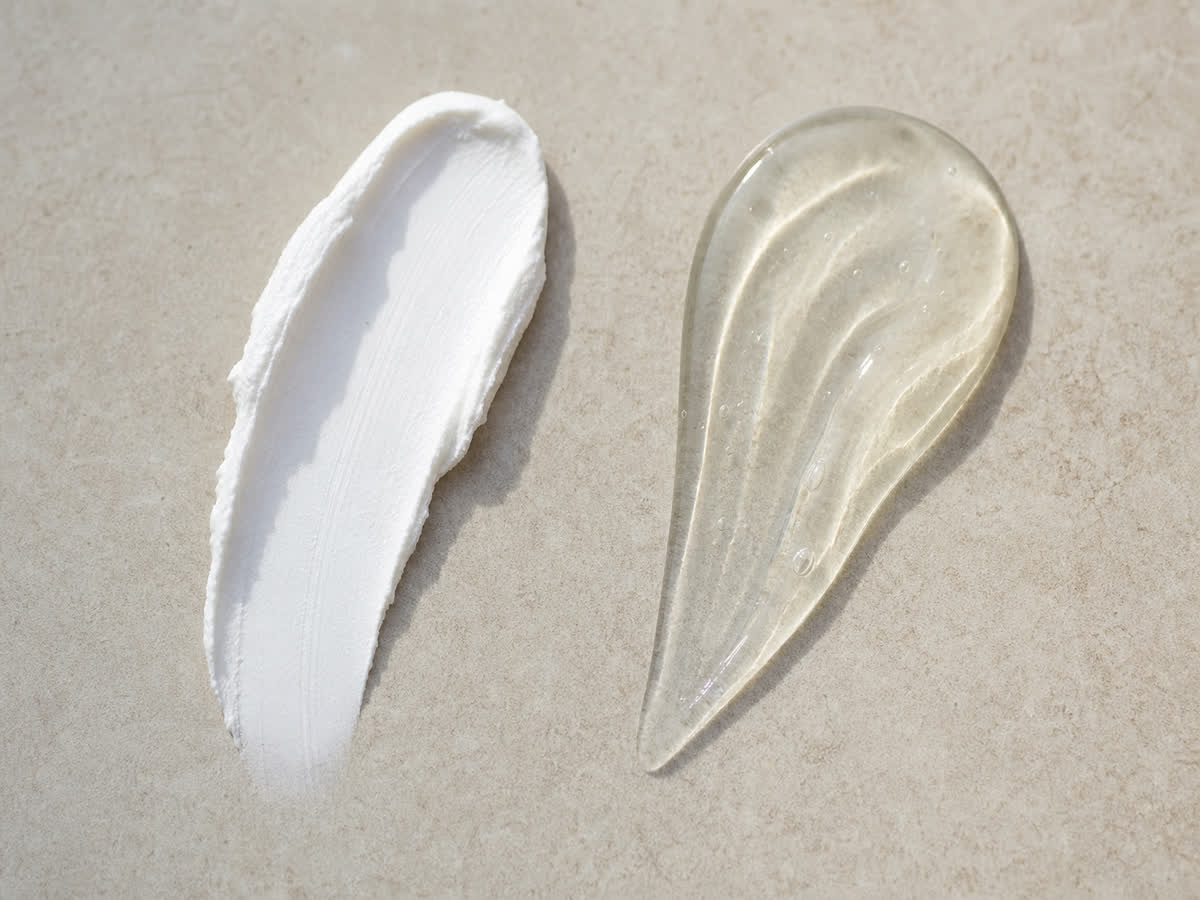
One of the biggest choices is between mineral (also called physical) and chemical sunscreens. Both protect your skin — they just do it differently.
Mineral (physical) sunscreen
Mineral sunscreens use zinc oxide and titanium dioxide to sit on top of the skin and physically reflect and scatter UV rays.
- Pros: gentle, ideal for sensitive and acne-prone skin, works immediately on application, broad-spectrum by nature, often preferred for children
- Cons: can leave a white cast (especially on deeper skin tones), may feel thicker, needs careful rubbing in
Chemical sunscreen
Chemical sunscreens use organic (carbon-based) filters that absorb UV rays and convert them into a small amount of heat that dissipates from the skin.
- Pros: lightweight, rubs in clear, easy to layer under makeup, no white cast
- Cons: needs 15 to 20 minutes to activate before sun exposure, can sting eyes, may irritate very sensitive skin
So which should you choose?
| If you have… | Consider |
|---|---|
| Sensitive or reactive skin | Mineral (zinc oxide) |
| Acne-prone skin | Non-comedogenic mineral or gel chemical |
| Deeper skin tone | Tinted mineral or clear chemical (avoid white cast) |
| A no-fuss daily routine | Lightweight chemical or hybrid |
| Young children | Mineral, fragrance-free |
The MedlinePlus sunscreen guidance from the NIH emphasizes that the most important thing is choosing a broad-spectrum SPF 30+ and using it correctly — the mineral-versus-chemical debate matters far less than applying enough and reapplying.
How Much Sunscreen Should You Actually Apply?
This is where most people go wrong. Studies consistently show people apply only a quarter to a half of the amount used to test SPF in labs — which means an SPF 30 might really be performing like an SPF 10 or lower on your skin.
The amounts to remember
- Whole body: about 1 ounce — roughly a shot glass full
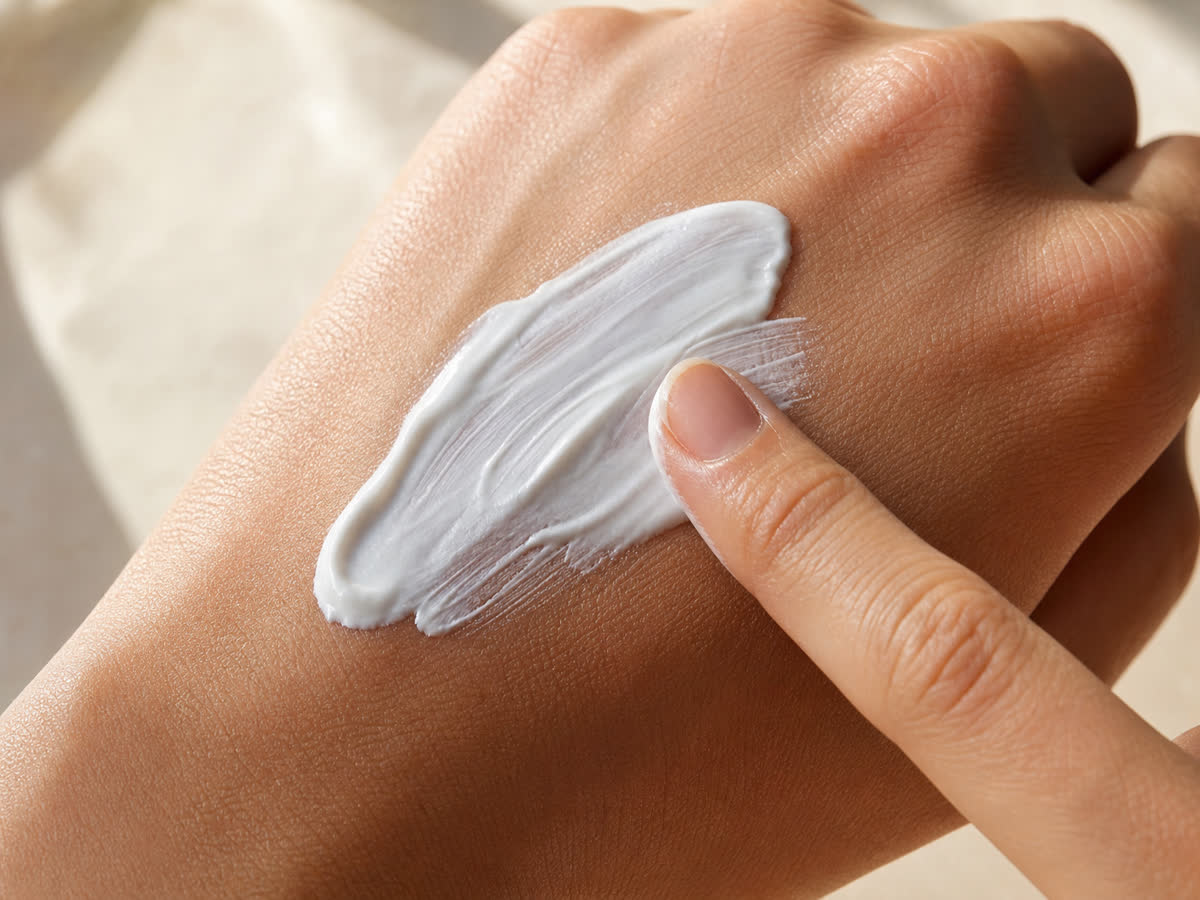
- Face and neck: about a quarter to half teaspoon
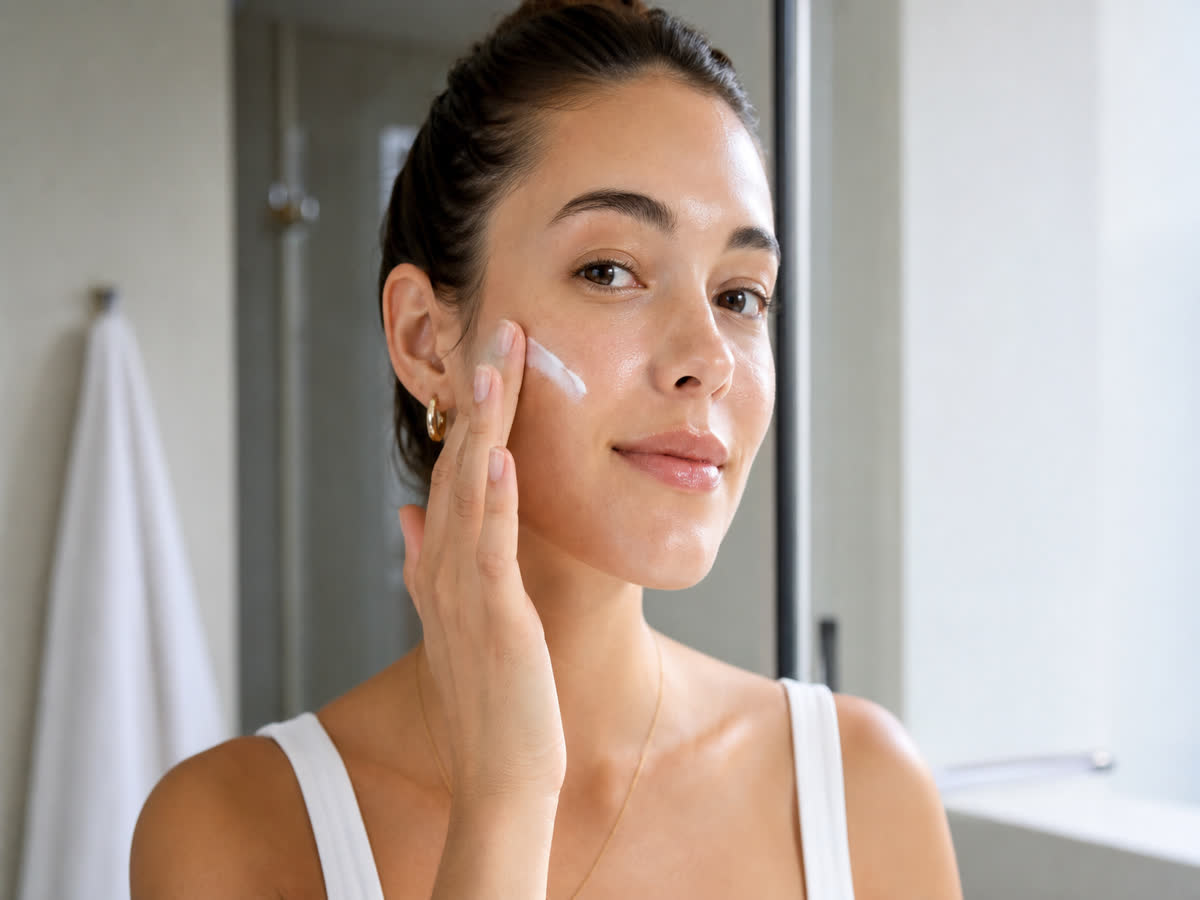
- The two-finger rule: squeeze a line of sunscreen along the length of your index and middle fingers for your face and neck
Don't forget the missed spots
Commonly forgotten areas include:
- Ears and the back of the neck
- Hairline and scalp part (or wear a hat)
- Lips (use an SPF lip balm)
- Tops of the feet and hands
- The eyelid area and under-eyes (use a gentle formula)
Apply sunscreen as the last step of your morning skincare routine — after moisturizer, before makeup. Give chemical formulas 15 to 20 minutes before heading outside. For a full routine that ends with SPF, see our beginner skincare routine guide and the deep dive on layering serums with sunscreen.
How Often to Reapply Sunscreen
Applying once in the morning is not enough for a full day outdoors. Sunscreen breaks down in UV light, rubs off on clothing, and washes away with sweat and water.
The reapplication rules
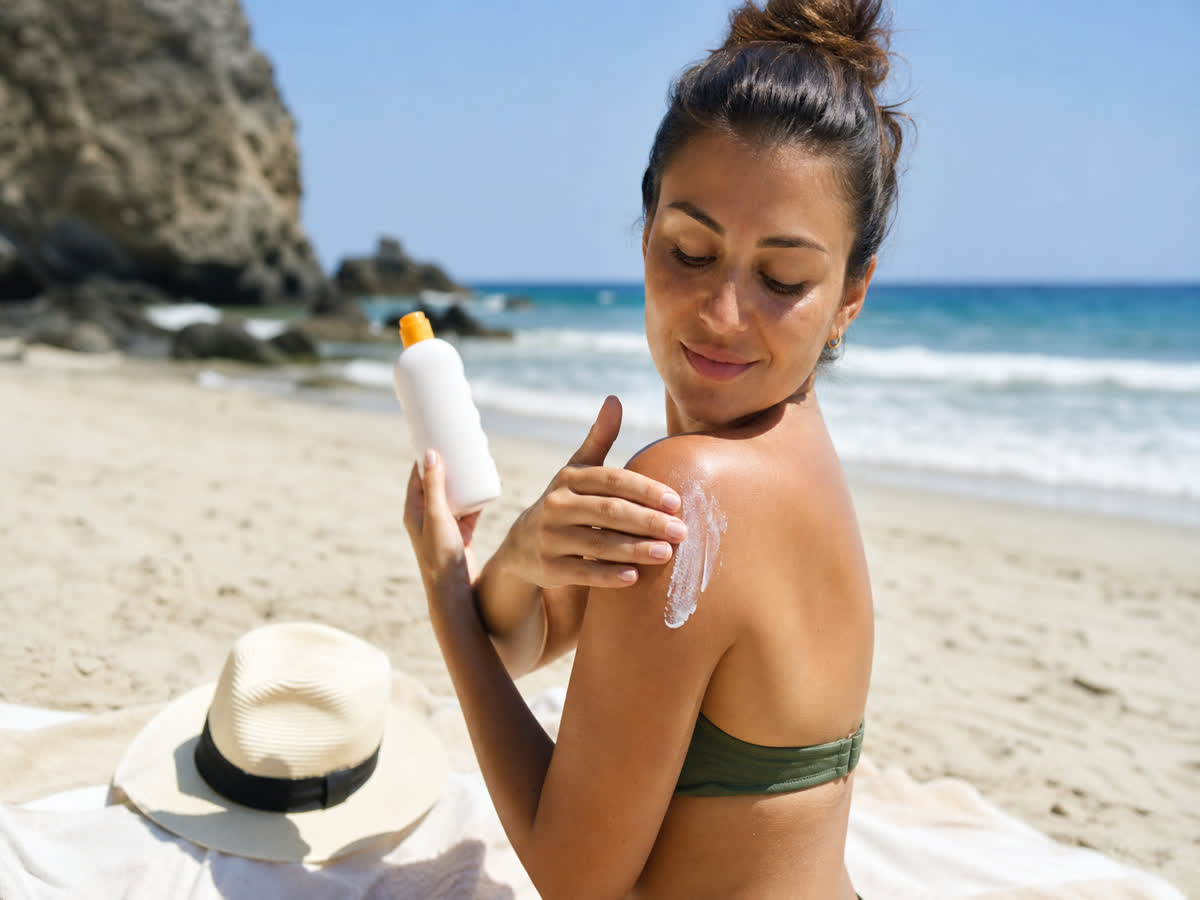
- Every 2 hours when you are outdoors
- Immediately after swimming, heavy sweating, or towel drying
- Water-resistant labels last 40 or 80 minutes in water — then reapply
No sunscreen is "waterproof" or "sweatproof" — those claims are not allowed on labels. Water-resistant is the strongest claim, and it still has a time limit.
Reapplying over makeup
If you wear makeup, midday reapplication feels impossible with a cream. Instead, use a powder sunscreen or a setting spray with SPF to top up protection without ruining your look. It is not a replacement for your morning base layer, but it keeps protection topped up.
Sunscreen for Different Skin Types and Tones
Sun protection is for everyone, but the ideal formula varies.
| Skin type / tone | What to look for |
|---|---|
| Oily / acne-prone | Oil-free, non-comedogenic, gel or fluid textures |
| Dry | Moisturizing sunscreens with hydrating ingredients |
| Sensitive | Mineral (zinc oxide), fragrance-free |
| Deeper skin tones | Tinted mineral or clear chemical to avoid white cast |
| Mature | Broad-spectrum + antioxidants for anti-aging support |
| Children | Mineral, fragrance-free, SPF 30+ |
A note on darker skin tones
A common and dangerous myth is that people with darker skin do not need sunscreen. While more melanin offers some natural protection and lowers sunburn risk, deeper skin tones still get UV damage, hyperpigmentation, and skin cancer — and skin cancer in darker skin is often caught later, making it more serious. Daily broad-spectrum SPF also helps prevent and even out the dark spots and uneven tone that UV worsens. Modern tinted and clear formulas make the old "white cast" problem largely a thing of the past.
Sunscreen and Vitamin D: Do You Have to Choose?
A frequent worry is that wearing sunscreen will cause vitamin D deficiency, since skin makes vitamin D from UVB rays. In real-world use, research is reassuring: regular sunscreen users generally maintain adequate vitamin D levels, partly because most people do not apply enough to fully block UVB and often miss spots.
The safest strategy is to protect your skin from cancer and aging and get vitamin D from food and supplements rather than deliberate unprotected sun exposure, which carries real risks. If you have symptoms like fatigue, low mood, bone aches, or frequent illness, read our detailed vitamin D deficiency guide and talk with your doctor about testing. Adequate vitamin D supports bones, immunity, and energy — but so does protecting your skin for a lifetime.
Beyond Sunscreen: Complete Sun Protection
Sunscreen is essential, but it works best as part of a bigger sun-safety plan. The CDC recommends combining several habits:
- Seek shade, especially between 10 a.m. and 4 p.m. when UV is strongest
- Wear protective clothing — long sleeves, tightly woven fabrics, and UPF-rated garments
- Wear a wide-brimmed hat to shade the face, ears, and neck
- Wear UV-blocking sunglasses to protect the eyes and delicate skin around them
- Avoid tanning beds, which emit concentrated UV radiation
Think of sunscreen as one layer of defense among several. On a very sunny day, combining shade, clothing, a hat, and sunscreen protects far better than relying on any single measure.

Common Sunscreen Mistakes to Avoid
Even people who use sunscreen daily often undermine it. Watch for these pitfalls:
- Applying too little — the number one mistake; use a generous, even layer
- Skipping reapplication — one morning application is not enough for a full day
- Only using it in summer — UV damage accumulates year-round, even in winter and indoors near windows
- Forgetting cloudy days — up to 80% of UV passes through clouds
- Missing spots — ears, neck, hands, feet, and hairline are commonly forgotten
- Using expired sunscreen — old or heat-damaged product loses effectiveness
- Relying on makeup SPF alone — makeup rarely provides enough coverage to reach its labeled SPF
- Waiting until you feel hot — by the time skin feels warm, UV damage is already happening
Myths vs Facts About Sunscreen
| Myth | Fact |
|---|---|
| "Higher SPF means I can stay out all day." | SPF measures protection, not time. Reapply every 2 hours regardless of the number. |
| "Dark skin doesn't need sunscreen." | All skin tones benefit; darker skin still gets damage, dark spots, and cancer. |
| "I don't need it indoors." | UVA passes through glass, so window and car exposure adds up. |
| "Sunscreen causes vitamin D deficiency." | Real-world sunscreen use rarely does; get vitamin D from food and supplements. |
| "Waterproof sunscreen exists." | No sunscreen is waterproof; water-resistant lasts 40 or 80 minutes. |
| "One application lasts all day." | It wears off through sweat, water, and rubbing; reapplication is essential. |
Sun protection is a small daily habit with an outsized payoff. Like managing stress or noticing the physical signs of anxiety early, the win comes from consistency, not intensity.
When to See a Doctor or Dermatologist
Sunscreen prevents damage, but you should also monitor your skin. See a healthcare provider or dermatologist if you notice:
- A new mole or a growth that is changing in size, shape, or color
- A mole with irregular borders, multiple colors, or asymmetry
- A sore that does not heal or bleeds and scabs repeatedly
- Any spot that itches, hurts, or looks different from your other moles
- A severe sunburn with blistering, or signs of sun poisoning
Use the ABCDE rule for moles: Asymmetry, Border irregularity, Color variation, Diameter over 6 mm, and Evolving or changing. Early detection saves lives. If you take medications that increase sun sensitivity or have a family history of skin cancer, ask your doctor how often you should have skin checks.
Reality check: No product replaces sensible sun behavior. Sunscreen, shade, clothing, and regular skin checks together are what protect you — not a big SPF number alone.
Key Takeaways
- SPF measures UVB protection, not how long you can stay in the sun. SPF 30 blocks ~97% of UVB; SPF 50 about 98%.
- Broad-spectrum is essential — it protects against aging UVA rays too, which SPF alone does not measure.
- Choose SPF 30 for daily use, SPF 50+ for extended outdoor time, always broad-spectrum and water-resistant if you sweat or swim.
- Mineral vs chemical matters less than applying enough and reapplying — pick the texture you will wear daily.
- Use enough: a shot glass for the body, the two-finger rule for the face, and reapply every 2 hours outdoors.
- Everyone needs sunscreen, every day, all year — including darker skin tones, cloudy days, and time indoors near windows.
- Combine sunscreen with shade, hats, sunglasses, and clothing, and see a dermatologist for any new or changing moles.
Explore Related Guides
- Best Skincare Routine for Beginners
- Retinol vs Vitamin C: Which to Use First
- Vitamin C Serum Secrets: Glowing Skin in 7 Days
- Vitamin D Deficiency: Symptoms, Causes & Treatment
- Vitamin C Deficiency: Symptoms & Scurvy Signs
- How to Lower Cortisol Naturally
- Daily Wellness Habits for Better Energy
- Best Sleep Hygiene Tips for Better Rest
- Stress Management Techniques That Work
- Anxiety: Physical Symptoms Explained
- Dehydration: Symptoms, Causes & Treatment
- Browse the Skincare hub
- Explore Vitamin Deficiency & Nutrition and Wellness & Lifestyle
Medical Disclaimer
Symptoms Insight publishes general health and skincare information for educational purposes only. It is not a substitute for professional medical or dermatological advice, diagnosis, or treatment. Sun protection needs vary based on skin type, medications, altitude, and personal and family history of skin cancer. Certain medications increase sensitivity to sunlight. Always read and follow product labels, and consult a qualified dermatologist or healthcare provider about your individual risk, any new or changing moles, or persistent skin concerns. Never disregard professional medical advice because of something you have read here.
About the publisher

Rajat
Health & Wellness Editor | Global
Health & Wellness Editor | Global
Rajat edits Symptoms Insight as a practical health publication focused on symptoms, vitamin deficiencies, skincare, wellness habits, and digital health — always encouraging readers to consult qualified healthcare professionals for personal medical decisions.
FAQ
Frequently asked questions
What SPF should I use every day?
For everyday use, dermatologists and public health agencies recommend a broad-spectrum sunscreen of at least SPF 30. SPF 30 blocks about 97 percent of UVB rays when applied correctly, which is enough for typical daily activities like commuting, working near windows, and short errands. If you spend extended time outdoors, swim, sweat heavily, or have very fair skin or a history of skin cancer, SPF 50 is a sensible upgrade. The most important factor is not the number itself but applying enough product and reapplying every two hours in the sun.
Is SPF 100 twice as good as SPF 50?
No. SPF numbers do not scale in a simple linear way. SPF 30 blocks roughly 97 percent of UVB, SPF 50 blocks about 98 percent, and SPF 100 blocks around 99 percent. The jump from 50 to 100 adds only about one extra percentage point of protection, not double. Higher numbers can give a false sense of security that leads people to apply too little or skip reapplication. A well-applied SPF 30 to 50 that you reapply reliably protects better than a high number used carelessly.
What does broad-spectrum sunscreen mean?
Broad-spectrum means the sunscreen protects against both UVA and UVB rays. UVB rays cause sunburn and play a major role in skin cancer, while UVA rays penetrate deeper and drive premature aging, wrinkles, and dark spots, and also contribute to skin cancer. SPF on its own only measures UVB protection, so a high SPF that is not broad-spectrum leaves your skin exposed to aging UVA rays. Always look for the words broad-spectrum on the label alongside the SPF number.
What is the difference between mineral and chemical sunscreen?
Mineral sunscreens use zinc oxide or titanium dioxide to sit on the skin and reflect and scatter UV rays. They are gentle, good for sensitive and acne-prone skin, and work immediately, though they can leave a white cast. Chemical sunscreens use ingredients that absorb UV rays and convert them to heat. They tend to feel lighter and rub in clear, but need about 15 to 20 minutes to activate and can irritate sensitive skin. Both are effective when they are broad-spectrum and applied properly, so the best choice is the one you will wear every day.
How much sunscreen should I apply?
Most people apply far too little, which dramatically lowers real-world protection. For the whole body, use about one ounce, roughly a shot glass full. For the face and neck alone, use about a quarter to a half teaspoon, or the two-finger rule where you squeeze a line of product along your index and middle fingers. Applying half the recommended amount can cut your effective SPF by more than half, so a generous layer matters as much as the SPF number on the bottle.
How often should I reapply sunscreen?
Reapply at least every two hours when you are outdoors, and immediately after swimming, sweating heavily, or towel drying. Water-resistant sunscreens last either 40 or 80 minutes in water, as stated on the label, but no sunscreen is fully waterproof. Even on a normal day, sunscreen wears off through touching your face, sweat, and rubbing against clothing, so reapplication is essential for lasting protection. For makeup wearers, powder or spray sunscreens make midday reapplication easier.
Does sunscreen block vitamin D?
In everyday real-world use, sunscreen does not appear to cause vitamin D deficiency for most people. Studies show that even regular sunscreen users typically maintain adequate vitamin D levels, partly because most people miss spots and do not apply enough to fully block UVB. If you are concerned about low vitamin D, the safest approach is to get it from food and supplements rather than deliberately unprotected sun exposure, which raises skin cancer risk. Talk with your doctor if you have symptoms of deficiency.
Do I need sunscreen on cloudy days or indoors?
Yes, more often than people think. Up to 80 percent of UV rays can pass through clouds, so overcast days still cause cumulative sun damage. UVA rays also penetrate glass, which means you get exposure sitting near windows at home, in the office, or while driving. Because UV damage adds up over a lifetime and drives most visible aging, applying broad-spectrum sunscreen every morning, year round, is one of the simplest and most effective anti-aging habits you can build.
What SPF is best for dark skin tones?
Everyone benefits from daily broad-spectrum sunscreen regardless of skin tone. While more melanin offers some natural protection and lowers sunburn risk, darker skin can still burn, develop UV damage, and get skin cancer, which is often diagnosed later and is more dangerous when it is. Deeper skin tones are also very prone to hyperpigmentation and dark spots that UV worsens. A broad-spectrum SPF 30 or higher helps prevent uneven tone, and modern tinted mineral or clear chemical formulas avoid the white cast.
Can sunscreen expire and still work?
Sunscreen does expire, and using an old bottle can leave you underprotected. Check the printed expiration date, and if there is none, most sunscreens last about three years from purchase. Heat exposure, like leaving a bottle in a hot car or beach bag, breaks the formula down faster. If the texture, color, or smell has changed, or the product has separated, replace it. Buying a fresh bottle each season is a small cost for reliable protection.