Editorial trust
How this article is handled
Prompt Insight articles may use AI-assisted research support, outlining, or drafting help, but readers should still verify time-sensitive details such as pricing, limits, and vendor policies on official product pages.
Review snapshot
What we checked for this guide
This article was written by checking current official material on AI agents and agentic systems, then combining that with practical workflow examples so the topic stays grounded in what autonomous AI can really do today.
- We distinguish between prompt-based AI and agentic AI so readers understand why autonomy changes the workflow model.
- The article focuses on practical uses such as planning, tool use, orchestration, and execution rather than treating agentic AI like science fiction.
- Risks around control, safety, security, and human oversight are included because autonomous systems create different problems than ordinary chat assistants.
Why it helps
Strong points readers should notice
- The article explains agentic AI in plain language with realistic business and productivity use cases.
- It covers both the excitement and the risk, which makes the piece more credible for readers and search.
- The post fits your future-tech cluster and connects naturally with your existing AI agents content.
Watchouts
Limits worth knowing up front
- Agentic AI is still uneven across tools, so not every product claiming autonomy can deliver on complex workflows.
- Readers can overestimate current capability if they ignore the need for guardrails, verification, and human review.
Official sources used
Pages checked while updating this article
Artificial intelligence is moving into a new phase.
For the last few years, most people experienced AI as something reactive. You typed a prompt, the model replied, and then the interaction ended unless you asked for another step. That was already impressive, but it still kept AI in the role of a tool that mostly waited for instructions.
Agentic AI changes that model.
Instead of simply answering questions, an agentic system can pursue a goal. It can break work into tasks, reason about what should happen next, use tools, react to new information, and continue moving toward an outcome with less manual intervention.
That shift is why Agentic AI is one of the most important AI trends of 2026.
This is not just a terminology update. It is a change in how digital work gets done. It is the difference between an assistant that gives advice and a system that can actually take action inside a workflow.
That is why businesses, developers, operators, and creators are paying attention.
If you already feel like AI tools are becoming less like chatbots and more like junior digital teammates, you are not imagining it. That is exactly the direction the market is moving.
In this guide, we will break down what agentic AI really means, how it works, where it is already being used, why it matters so much in 2026, and what risks people need to think about before handing too much power to autonomous systems.
If you want the freelancer-focused version of this trend after this, read How AI Agents Are Changing Freelancing in 2026.

What is agentic AI?
Agentic AI refers to artificial intelligence systems designed to operate as agents.
That means they are built to do more than generate output. They are designed to:
- pursue goals
- choose next steps
- use tools
- reason through tasks
- react to changing inputs
- iterate toward a result
The key word is agency.
Agency, in this context, does not mean the system is conscious or fully independent in the human sense. It means the system can handle more of the work loop on its own.
That is why agentic AI feels so different from classic chat interfaces.
Traditional AI:
- waits for a prompt
- returns a response
- stops
Agentic AI:
- accepts a goal
- breaks it into steps
- executes parts of the work
- reviews progress
- adjusts if needed
- keeps moving until the goal is reached or human input is required
That is a very different model of value.
Traditional AI vs agentic AI
The easiest way to understand this shift is to compare behaviors.
| Feature | Traditional AI | Agentic AI | | --- | --- | --- | | Input model | Mostly prompt-based | Goal-based and workflow-aware | | Behavior | Reactive | Proactive | | Task style | Single-step or short chain | Multi-step execution | | Memory use | Often limited to a session | More context-aware and persistent | | Tool use | Optional and narrow | Often central to the workflow | | Role in work | Helper | Doer plus helper |
That last row matters the most.
Traditional AI helps.
Agentic AI helps and acts.
Why 2026 is the breakout year for agentic AI
The reason agentic AI is everywhere in 2026 is simple: the technology stack finally supports it better than before.
Three things changed at once:
- models became better at reasoning and tool use
- companies started building workflows around outcomes instead of just prompts
- users began demanding automation that removes work, not just text generation
That combination changed expectations.
OpenAI's public work around agents and Operator pushed the idea of AI systems that can browse, click, type, and complete tasks across the web. Microsoft has been building more formal thinking around agent design patterns and orchestration. Google Cloud has also framed agentic AI as a shift from passive assistance to goal-directed systems that can coordinate work across environments.
This matters because it shows the term is not just social-media hype. It is a category that major companies are actively designing around.
How agentic AI works
Agentic AI looks magical from the outside, but the internal model is easier to understand when broken into layers.
1. Goal-oriented planning
An agent starts with an objective.
That objective could be:
- research competitors
- generate a weekly report
- review support tickets
- build a campaign brief
- summarize product feedback
Instead of immediately producing one answer, the system tries to understand the goal and divide it into smaller tasks.
That planning layer is critical. Without it, the system is just improvising. With it, the system becomes much better at handling real workflows.
2. Iterative reasoning
Once the goal is set, the system does not just move linearly. It evaluates what happened and adjusts.
That means it may:
- re-check missing information
- correct a weak step
- try another route
- ask for approval
- switch tools
This is one reason agentic AI feels more alive than older automation layers. It is not just following a static script. It is reasoning through changing conditions.
3. Memory and context
A strong agent needs context.
That can include:
- previous actions
- user preferences
- current environment
- task history
- available tools
- system rules
Without memory or context, even smart agents become brittle. They repeat work, lose continuity, or make decisions in isolation.
4. Tool usage
This is where agentic AI becomes operational.
Agents often use:
- browsers
- APIs
- internal documents
- databases
- calendars
- CRMs
- support systems
- spreadsheets
- code tools
Tool use is one of the clearest differences between a general answer model and an action-oriented AI system.
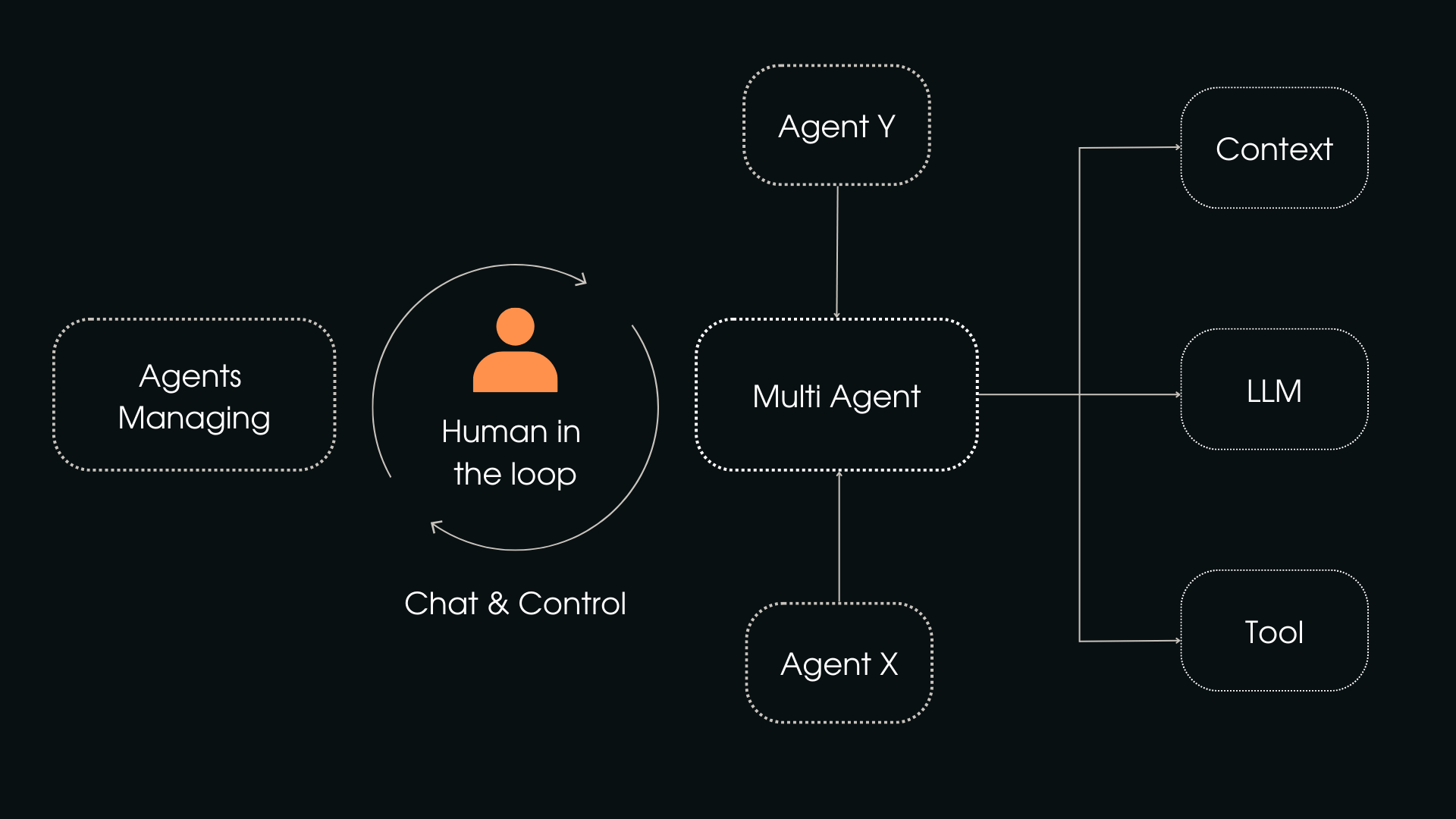
5. Multi-agent collaboration
In more advanced setups, one agent does not do everything.
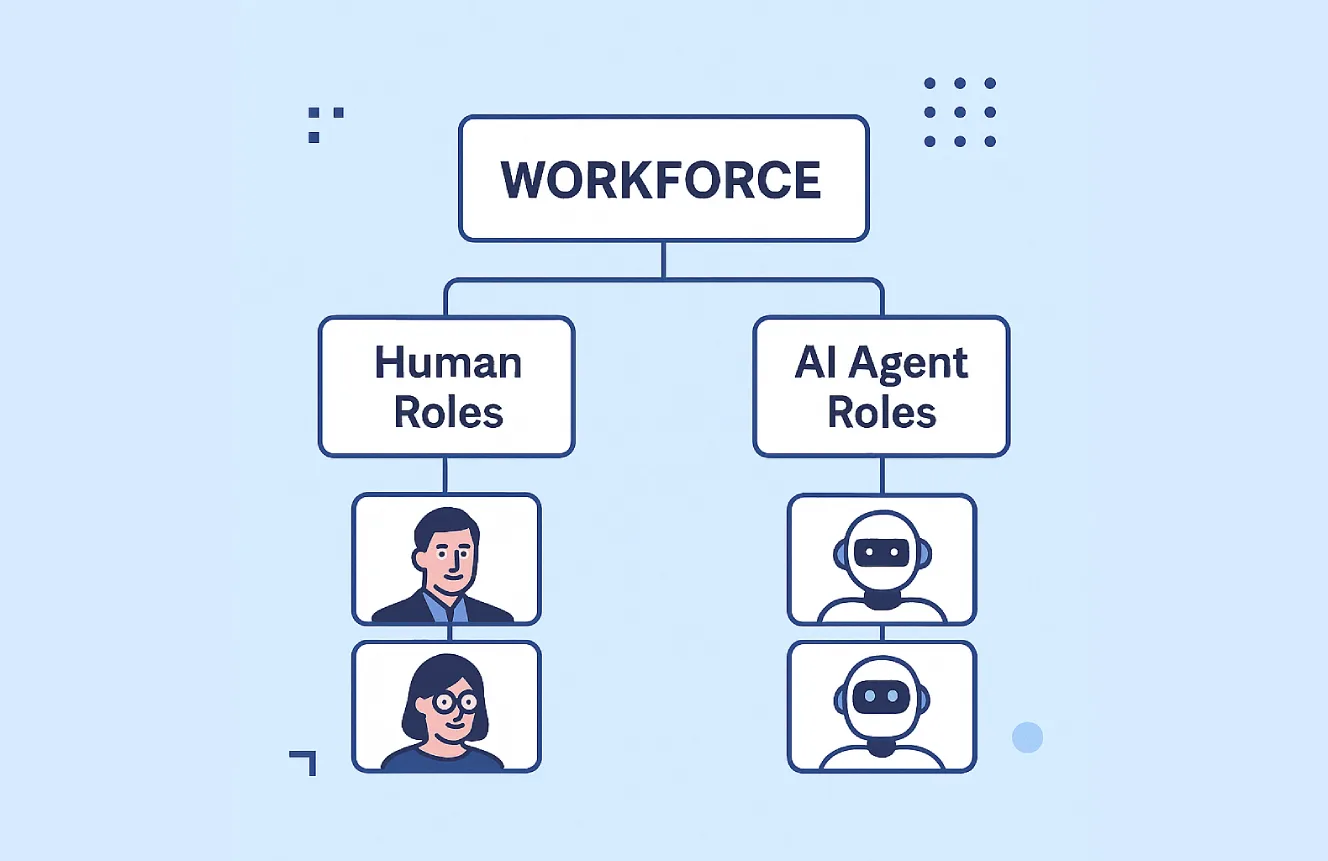
Instead, multiple agents may work together. One agent may research. Another may write. Another may validate. Another may communicate with a human reviewer.
That is why you increasingly hear the phrase multi-agent systems in 2026.
What can agentic AI actually do in real life?
This is the question that matters most.
Because if the answer is only "interesting demo," then the trend is overrated.
But that is not where the market is now.
Business automation
This is one of the biggest areas of real value.
Agentic AI can help businesses automate workflows that are too dynamic for basic rule-based automation.
Examples include:
- triaging inbound messages
- pulling relevant customer context
- preparing response drafts
- escalating unusual cases
- summarizing operations reports
- managing repetitive internal tasks
This is not just about speed. It is about reducing coordination overhead.
Software development
Developers are already seeing agentic patterns show up in coding tools.
An agentic workflow in software may:
- inspect a codebase
- propose a plan
- edit files
- run checks
- fix errors
- repeat until the task stabilizes
That is much closer to task completion than code autocomplete.
Marketing and content operations
Agentic systems can support:
- research pipelines
- outline creation
- content repurposing
- campaign scheduling
- performance checks
- SEO workflows
The strongest use case is not "write everything automatically." It is "handle the repeated parts so humans can focus on judgment and originality."
Customer operations
Support teams and operations teams can benefit heavily from agentic systems because their work often involves:
- many small decisions
- repeated patterns
- tools spread across multiple systems
- constant prioritization
That makes the category a natural fit for agent-driven workflows.
Personal productivity
Agentic AI also matters at the individual level.
A personal agent could help with:
- scheduling
- reminders
- research prep
- travel coordination
- inbox management
- personal admin
This is where agentic AI begins to overlap with the future of AI-powered personal assistants in 2030.
Why businesses are excited about agentic AI
Because most modern work is not one task. It is a chain of tasks.
People do not just write one email. They gather context, check a file, update a CRM, ask a teammate, adjust a schedule, and then send the message.
The value of agentic AI is that it targets the chain.
That creates three major benefits.
1. Higher efficiency
When the system can handle part of the execution loop, teams spend less time stitching tasks together manually.
2. Lower operational drag
A lot of modern work is not intellectually difficult. It is just fragmented.
Agentic AI reduces that fragmentation.
3. Better scalability
If a workflow can be handled partially by agents, a team can often support more demand without linearly expanding headcount.
That does not mean fewer humans automatically. It means the same team can operate more effectively.
What are the biggest risks?
This is where the topic becomes serious.
Agentic AI is powerful because it can act.
That is also exactly why it can fail in more dangerous ways than ordinary chat tools.
Loss of control
The more autonomy a system has, the more important it becomes to define boundaries clearly.
An agent with weak constraints can:
- take the wrong action
- complete the wrong task
- overreach into sensitive systems
- create bad downstream effects before a human notices
Security concerns
An agent that can access tools, accounts, and internal systems becomes a larger security surface.
This matters especially when agents touch customer data, financial systems, or code environments.
Hallucination plus action
Hallucination is already a problem in AI.
When hallucination is connected to action, the stakes are higher.
A wrong answer is bad.
A wrong action can be much worse.
Ethical and accountability questions
If an autonomous system makes a bad decision, who is responsible?
The product team? The operator? The manager? The company?
Those questions become harder when AI is not just advising, but acting.
Job disruption
Yes, this topic matters too.
Agentic AI will likely automate some categories of task-heavy knowledge work faster than many people expect. The biggest pressure will fall on roles filled with:
- repetitive coordination
- predictable documentation
- structured analysis
- standardized response patterns
But that does not automatically mean human work disappears. It means human work shifts upward toward oversight, design, judgment, exception handling, and trust.
Will agentic AI replace human workers?
Not in the simplistic way many headlines suggest.
The more accurate answer is:
Agentic AI will replace some workflows, some tasks, and some low-complexity roles faster than others, while also increasing the value of humans who can manage systems, define goals, and make good decisions.
That is not a soft answer. It is the realistic one.
The workers who benefit most will usually be those who can:
- design better workflows
- review outputs critically
- define constraints
- use AI for leverage without becoming dependent on it blindly
What should companies do before adopting agentic AI?
They should slow down enough to do it properly.
The mistake is not using agentic AI.
The mistake is deploying it everywhere without structure.
A strong rollout usually needs:
- clear task boundaries
- human review points
- permission controls
- logging and auditability
- performance monitoring
- fallback paths when the agent fails
The companies that win here will be the ones that treat agents like serious operational systems, not novelty demos.
Final takeaway
Agentic AI is one of the biggest shifts in artificial intelligence because it moves AI from passive assistance into active execution.
That is the real leap.
It is not just that the models are smarter. It is that they are being designed to pursue outcomes, use tools, coordinate work, and continue across multiple steps with less hand-holding than earlier systems needed.
That makes 2026 an important year.
We are now watching the early formation of a world where AI does not simply answer, but increasingly acts.
The opportunity is enormous.
So is the responsibility.
Used well, agentic AI can remove repetitive work, accelerate execution, and help people focus on higher-value thinking.
Used badly, it can create chaos at scale.
That is why the future of agentic AI will not be decided only by capability.
It will be decided by how well humans design the systems around it.
About the publisher

Rajat
Automation Engineer · India
Automation Engineer | India
Rajat is an Automation Engineer building a practical space around AI generation, automation, and digital workflows. Through Prompt Insight, he helps students and professionals understand AI tools, work more efficiently, and find a clearer path through fast-moving technology.
Recommended tools
Tools that fit this workflow
AI assistant
ChatGPT
A flexible assistant for drafting, ideation, summarizing, and turning rough notes into usable work.
AI assistant
Gemini
Useful when your workflow already lives inside Google apps and you want AI help across that stack.
Research
Perplexity
Great for research-heavy tasks when you need a quick answer with links you can verify.
FAQ
Frequently asked questions
What is agentic AI?
Agentic AI refers to AI systems that can plan, reason, use tools, and take multi-step actions toward a goal with less constant prompting from a human.
How is agentic AI different from normal AI chatbots?
Traditional chatbots mostly respond to prompts, while agentic AI systems are designed to pursue outcomes, manage tasks, and act across multiple steps or tools.
Is agentic AI already being used in real work?
Yes. Businesses are using early agentic systems for research, customer operations, software tasks, automation, and workflow orchestration.
What is the biggest risk of agentic AI?
The biggest risk is giving an autonomous system too much access or authority without strong oversight, boundaries, and verification.
Will agentic AI replace human workers?
It will automate some tasks and reshape some jobs, but human judgment, accountability, and strategy still matter in most serious workflows.