Editorial trust
How this article is handled
Vehicle Insight articles may use AI-assisted research support, outlining, or drafting help, but readers should still verify time-sensitive details such as pricing, variants, safety equipment, mileage, and dealer offers on official brand or retailer pages.
Review snapshot
What we checked for this guide
This guide was written by checking Tesla's current investor materials, the original Cybercab reveal coverage, and Reuters reporting around production timing so the timeline stays tied to real signals rather than fan speculation.
- Tesla's Q4 2025 update deck points to an Austin robotaxi pilot in June 2026 and says preparations continue for Cybercab production ramps in the first half of 2026.
- Reuters reported in January that Tesla was still targeting Cybercab production before 2027, which keeps the 2026 manufacturing timeline credible without proving wide public availability.
- The price discussion in this article is framed as an estimate because Tesla has not published a final public Cybercab sticker price.
Why it helps
Strong points readers should notice
- The article separates the reveal date, pilot launch timing, production ramp, and mass rollout instead of blending them into one vague headline.
- It explains Tesla's robotaxi business model in plain language for regular readers, not only EV enthusiasts.
- The guide fits your future-mobility cluster and targets high-intent Cybercab search phrases directly.
Watchouts
Limits worth knowing up front
- Tesla still has major autonomy, regulation, and liability hurdles to clear before Cybercab can scale.
- The most exciting parts of the Cybercab story are still partly forward-looking rather than fully commercialized.
Official sources used
Pages checked while updating this article
Tesla's Cybercab story has moved out of pure concept territory and into timeline territory.
That is why people are paying so much attention in 2026.
The shift is not only about design. It is about the fact that Tesla now has three layers of the robotaxi narrative active at the same time:
- a public Cybercab concept already revealed
- an official Austin robotaxi pilot targeted for June 2026
- ongoing language from Tesla and Reuters that keeps 2026 central to Cybercab production progress
That does not mean you will be able to open the Tesla app and summon a Cybercab in every city this year.
It does mean the story is no longer only theoretical.
The real question now is not whether Tesla wants a robotaxi future. That part is obvious.
The real question is: how close is Tesla to turning Cybercab from a dramatic reveal into a real vehicle, a real network, and a real business?
If you want the broader industry angle, read Tesla Robotaxi Could Finally Be Real in 2026. Here Is What Changes If It Works.
What is Tesla Cybercab?
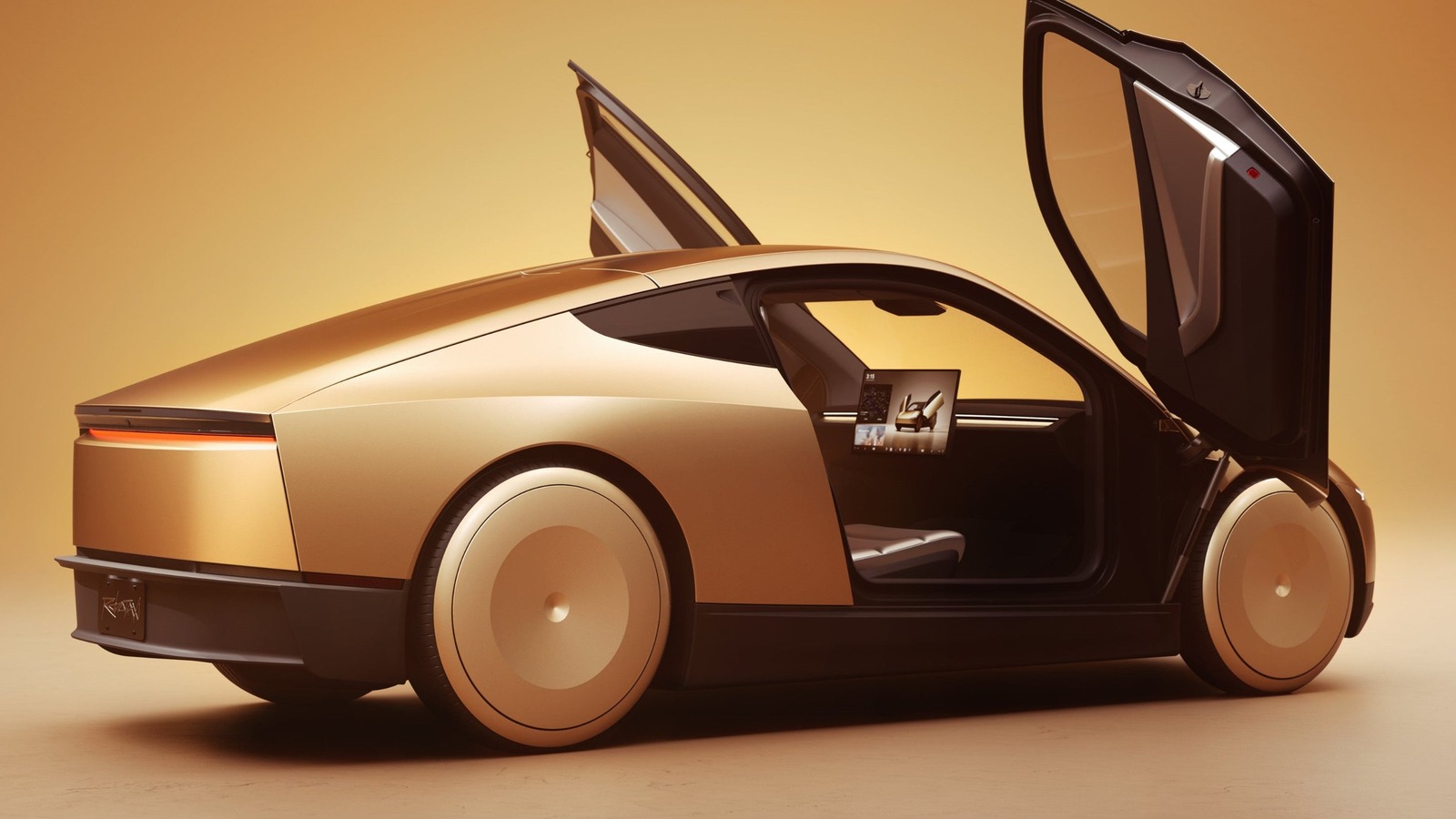
Tesla Cybercab is Tesla's purpose-built robotaxi concept, designed around autonomous ride-hailing instead of traditional human driving.
That distinction matters.
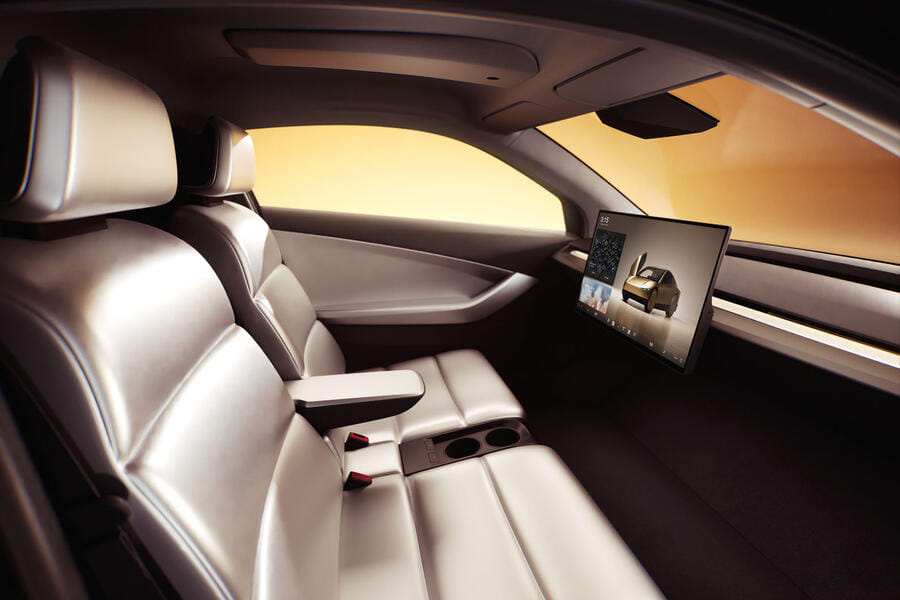
This is not simply a smaller Tesla with stronger self-driving software. Cybercab was introduced as something much more radical:
- no steering wheel
- no pedals
- a stripped-down, minimalist interior
- a product logic built around transport service, not personal control
Once Tesla removes the steering wheel, the meaning of the vehicle changes. The car is no longer saying, "I will help you drive." It is saying, "The long-term goal is for you not to drive at all."
That is why Cybercab is not just another EV launch. It is Tesla's clearest public statement that autonomous transport should become a product category of its own.
Tesla Cybercab 2026 release date: what is official and what is estimated?
This is where most headlines get messy. People often compress four separate milestones into one:
- concept reveal
- robotaxi service launch
- Cybercab production ramp
- broad consumer availability
Those are not the same event.
What Tesla has officially said
Tesla's Q4 2025 update deck says:
- a pilot robotaxi ride-hailing service is planned in Austin in June 2026
- Tesla expects to expand its service footprint to more U.S. metros later in 2026
- the company is continuing preparations for Cybercab production ramps commencing in the first half of 2026
That is the clearest official timing signal available right now.
What Reuters reported
Reuters reported in late January that Tesla was still targeting Cybercab production before 2027. That lines up with Tesla's broader 2026 framing and keeps this year central to the story.
What that means in practice
The most realistic reading is:
- Tesla wants robotaxi operations live in a limited way first
- Cybercab production activity becomes meaningful in 2026
- any wide rollout beyond a few early markets will likely take longer
So if someone asks, "Is Tesla launching Cybercab in 2026?" the disciplined answer is:
Tesla appears to be moving from reveal to limited deployment and production prep in 2026, but not to instant mass availability.
| Milestone | Current status | What it really means |
|---|---|---|
| Cybercab concept reveal | Completed | Tesla has publicly shown the product direction and design language |
| Austin robotaxi pilot | Officially targeted for June 2026 | Tesla wants real ride-hailing service running in a controlled starting market |
| Cybercab production ramp | Linked to first-half 2026 prep | Manufacturing progress matters this year, even if scale stays limited at first |
| Mass public rollout | Not confirmed | This remains the most speculative part of the entire timeline |
Tesla Cybercab price: how much could it cost?
Tesla has not published a final Cybercab retail price, so any number you see today should be treated as an estimate.
Still, the expected range most closely associated with the project remains:
- $25,000 to $35,000
- roughly Rs. 20 lakh to Rs. 30 lakh before India-specific taxes, duties, and local market realities
Why do people believe Tesla wants the price this low?
1. Cybercab is not being framed like a premium personal car
Tesla is not presenting this as a luxury sedan for traditional ownership. It is presenting it as a robotaxi-first machine with fewer human-control components and a simpler mission profile.
2. The business model depends on scaling
The robotaxi model only becomes powerful if Tesla can produce and deploy vehicles in meaningful numbers. That gives Tesla a strong incentive to reduce complexity and push manufacturing efficiency.
3. The product is tied to network economics
Tesla is not only thinking about the initial purchase price. It is also thinking about trip revenue, fleet efficiency, charging cost, platform commissions, and lifetime operating economics.
The most important takeaway is this:
The value story around Cybercab is not only about what you pay for the vehicle. It is about what the vehicle might be able to do inside Tesla's robotaxi network.
Tesla's robotaxi plan explained simply
This is where Cybercab becomes more than a futuristic car article.
Tesla's long-term robotaxi strategy is built around a straightforward but disruptive idea:
- Tesla runs a self-driving ride-hailing network
- Tesla-owned vehicles, and potentially eligible owner vehicles, join that network
- Riders request trips through a Tesla-managed service flow
- The vehicle completes trips autonomously
- Tesla keeps part of the economics while the fleet or vehicle owner participates in the upside
That is why so many people compare the project to Uber.
But Tesla is not trying to build Uber with electric vehicles. It is trying to build ride-hailing without drivers.
Why investors care so much
In normal car ownership, the vehicle is usually a depreciating expense.
Tesla wants people to imagine the opposite:
- a car as an earning asset
- a vehicle as part of a transport platform
- mobility delivered as software plus fleet operations
That is the deeper reason the Cybercab story keeps trending. It sits right where AI, transport, and money start to overlap.
Why Cybercab matters even before it reaches scale
Even if Tesla rolls out slowly, Cybercab already matters for four reasons.
1. It changes the public conversation
Autonomy is no longer only a software checkbox inside a product presentation. Tesla has turned it into a concrete product form.
2. It pressures every competitor
Every automaker, regulator, and ride-hailing platform now has to respond to a direct question: what happens if a viable driverless fleet model actually arrives?
3. It brings AI into the center of car economics
The value of Cybercab depends on machine perception, decision-making, and fleet intelligence. That makes it a real AI infrastructure story, not just a transportation headline.
4. It could change how cities think about ownership
If autonomous rides become cheap and reliable enough, some urban users may no longer want the hassle of parking, maintenance, insurance, or second-car ownership.
That does not mean ownership disappears. It does mean the value proposition could change.
The technology bet behind Cybercab
Tesla's approach remains one of the most debated parts of the project.
While some autonomy competitors rely heavily on LiDAR-rich stacks, Tesla continues to bet on:
- camera-based perception
- neural networks
- real-world fleet data
- onboard AI compute
Tesla believes vision plus large-scale training data can solve autonomy at scale.
If Tesla is right, Cybercab becomes easier to scale globally because the hardware stack can stay leaner and more cost-efficient. If Tesla is wrong, the entire Cybercab timeline gets harder.
What could slow Tesla down?
This is where the hype meets the real-world constraints.
Regulation
Governments do not move at startup speed. Tesla can ship code fast, but autonomous service approval is a city-by-city and state-by-state challenge.
Edge cases
Autonomy gets hardest in rare situations like construction zones, poor weather, emergency vehicles, unusual road layouts, and unpredictable pedestrian behavior.
Liability
If a robotaxi crashes, accountability becomes complicated very quickly. Tesla, the fleet operator, the software stack, and the owner all become part of the discussion.
Operations
A robotaxi network also needs charging, cleaning, maintenance, demand balancing, and customer support. Even if the AI works, the service still has to work.
Final verdict
Tesla Cybercab is one of the most important mobility stories of 2026 because it sits exactly where AI, transport, and economics collide.
The official signals now point to a real 2026 inflection point:
- pilot robotaxi service in Austin
- production preparation moving forward
- a clearer path from concept to commercialization
That still does not guarantee flawless execution. But it does mean Cybercab is no longer a distant fantasy project people can dismiss with one joke.
If even part of Tesla's plan works, Cybercab will do more than launch a new vehicle. It will change how people think about cars, transport, and the business of mobility itself.
FAQs
What is Tesla Cybercab in simple words?
Tesla Cybercab is Tesla's planned autonomous robotaxi vehicle, designed without a steering wheel or pedals and built around self-driving ride-hailing.
Is Tesla launching Cybercab in 2026?
Tesla's current signals point to 2026 as the key year for robotaxi pilot activity and Cybercab production progress, but not necessarily a wide public rollout in every market.
How much will Tesla Cybercab cost?
Most current estimates place Cybercab around $25,000 to $35,000, but Tesla has not confirmed a final production price.
How does Tesla's robotaxi plan work?
Tesla wants autonomous vehicles to run inside a ride-hailing network so trips can happen without human drivers and vehicles can potentially generate transport revenue while in service.
Why is the Cybercab important?
Because it pushes transport toward a future where AI-driven fleets may compete directly with traditional car ownership and human-driver ride-hailing models.
About the publisher

Rajat
Automobile Trends Editor | India
Automobile Trends Editor | India
Rajat edits Vehicle Insight as a practical automobile publication focused on new launches, car and bike reviews, EV updates, safety features, ownership costs, and future mobility trends for Indian readers.
FAQ
Frequently asked questions
What is Tesla Cybercab?
Tesla Cybercab is Tesla's dedicated robotaxi concept, built without a steering wheel or pedals and designed around autonomous ride-hailing.
Is Tesla launching Cybercab in 2026?
Tesla's current signals point to 2026 as the key year for pilot robotaxi service and Cybercab production progress, but not necessarily a broad consumer rollout everywhere.
How much will Tesla Cybercab cost?
Most current estimates place Cybercab around $25,000 to $35,000, but Tesla has not confirmed a final production price.
How does Tesla's robotaxi plan work?
Tesla wants autonomous vehicles to run inside a ride-hailing network so trips can happen without human drivers and vehicles can potentially earn transport revenue while in service.
Why is the Cybercab important?
It matters because it pushes transport toward a future where AI-driven fleets could compete directly with traditional car ownership and ride-hailing models.
