Editorial trust
How this article is handled
Prompt Insight articles may use AI-assisted research support, outlining, or drafting help, but readers should still verify time-sensitive details such as pricing, limits, and vendor policies on official product pages.
Review snapshot
What we checked for this guide
This future-tech guide was written by checking current official product signals around AI agents, Android XR glasses, and AI wearables, then translating those real developments into a grounded 2030 outlook rather than treating speculation like confirmed product history.
- We used current product direction from OpenAI, Google, and Meta to explain why assistants are becoming more proactive, cross-device, and context-aware.
- We kept the article future-facing, but we did not present speculative 2030 features as guaranteed outcomes.
- Privacy, safety, and over-reliance risks are included because assistant technology is likely to become more embedded in personal routines, not less.
Why it helps
Strong points readers should notice
- The article explains the 2030 assistant trend in plain language instead of hype-heavy futurism.
- It connects today's products with tomorrow's likely behavior changes, which makes the prediction more credible.
- Readers get both practical examples and realistic cautions, which improves trust and readability.
Watchouts
Limits worth knowing up front
- Some examples depend on current prototypes and early product directions, so exact 2030 form factors may change.
- Personal assistants will improve unevenly across markets because privacy rules, device cost, and infrastructure still matter.
Official sources used
Pages checked while updating this article
AI assistants used to feel like novelty features.
You would ask a quick question, set a timer, maybe play a song, and move on. They were useful in small moments, but they were not central to how most people lived or worked.
That is changing fast.
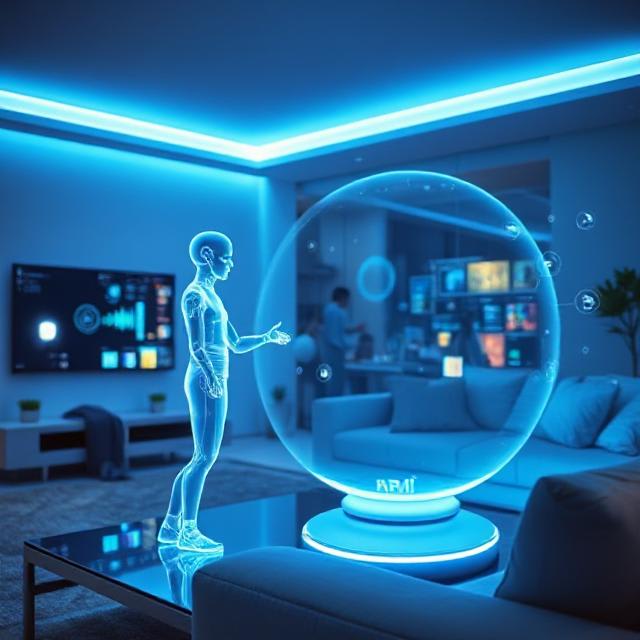
By 2030, AI-powered personal assistants are likely to feel less like voice-command tools and more like full-time digital companions that move across your devices, understand your habits, remember your preferences, and help coordinate your day before you ask. The biggest shift is not that they will talk better. The biggest shift is that they will act with more context.
That means your future assistant may not just respond when you say, "Remind me about my meeting."
It may notice your calendar has shifted, your route is delayed, your glasses are showing low battery, your notes from yesterday's client call mention a deck that still needs edits, and your inbox has a confirmation email you have not replied to. Then it could surface the right prompt, summary, or next step at the moment it matters.
That is the real story behind AI-powered personal assistants in 2030.
This article looks at what those assistants are, why the next few years matter so much, what technologies are pushing them forward, and where the biggest opportunities and risks are likely to show up first.
If you want the wearable side of this future after this, read AI Smart Glasses in 2030: The Wearable Assistants That Could Replace Your Phone.
What is an AI-powered personal assistant?
An AI-powered personal assistant is a software system that uses artificial intelligence to help with tasks, communication, planning, and decision support.
The simple definition is easy.
The important definition is deeper:
It is a system that can increasingly combine memory, context, language, device access, and action.
That combination is why assistants in 2030 will be very different from assistants in the 2010s.
The evolution in one simple timeline
- 2010s: assistants mostly reacted to short voice commands
- early 2020s: assistants improved at language, summaries, and multi-step help
- mid 2020s: assistants started gaining visual understanding, cross-app actions, and agent-style workflows
- toward 2030: assistants are likely to become predictive, wearable, multimodal, and much more integrated with daily life
The word predictive matters most.
Today, we still mostly tell the assistant what to do.
By 2030, the best assistants will be designed to understand when a task is about to matter.
Why 2030 is such a big milestone
People often talk about 2030 as if it is a distant science-fiction date. It really is not.
We are already seeing the early building blocks now.
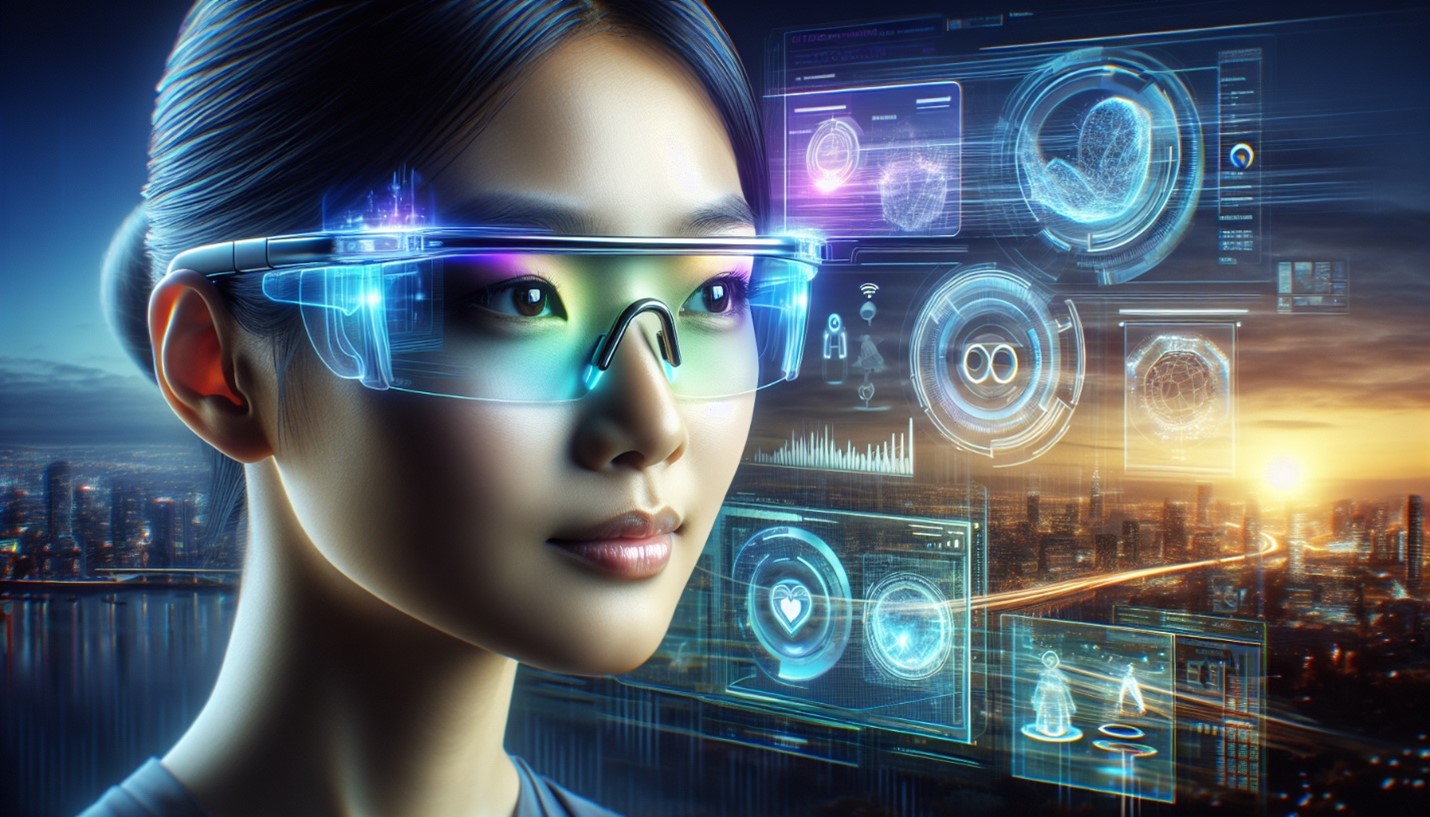
OpenAI's Operator announcement showed an assistant that can use a browser to click, type, scroll, and complete real web tasks. That matters because it shifts AI from answering into doing. Google has already outlined Android XR as a platform where Gemini can support glasses with directions, translations, and message summaries in your line of sight. Meta has pushed AI wearables forward through Ray-Ban Meta glasses and the Orion AR prototype, where Meta AI is framed as part of a more helpful, context-aware wearable experience.
None of those products is the full 2030 assistant yet.
But together, they show the direction clearly:
- assistants are becoming multimodal
- assistants are becoming agentic
- assistants are becoming wearable
- assistants are becoming cross-device
That is why 2030 feels like a real turning point instead of a random future date.
Which technologies will define AI assistants in 2030?
Future assistants will not be powered by one breakthrough alone. They will be powered by several trends maturing at the same time.
1. Better machine learning and personalization
Assistants are improving at pattern recognition, preference learning, and long-context understanding.
That means they can increasingly learn things like:
- how you schedule your mornings
- who you reply to fastest
- which tasks you delay
- what type of summary style you prefer
- when you need reminders versus when you need silence
The best assistants in 2030 will probably feel less like software menus and more like adaptive behavioral layers.
2. Natural language understanding will become more conversational and more practical
Talking to an assistant will not be limited to short commands.
You will be able to say things like:
"Move my afternoon around because I need two quiet hours before the client review, and also summarize what changed since yesterday."
That kind of request needs language understanding, calendar logic, prioritization, memory, and action. That is exactly the kind of combined capability assistant platforms are moving toward.
3. Visual and real-world understanding
One of the biggest upgrades already happening in the mid-2020s is that assistants are starting to understand what they see.
This matters because personal help is rarely only text.
You often need assistance with:
- a screen
- a receipt
- a room
- a product
- a sign
- an email thread
- a dashboard
Google's Android XR vision and Meta's Orion direction both point toward assistants that can understand the environment around you, not just the prompt you type.
4. Edge computing and private on-device processing
The future assistant cannot depend only on slow cloud roundtrips if it is supposed to help in real time.
By 2030, much more assistant behavior will likely happen directly on devices or through hybrid edge-plus-cloud systems.
That helps with:
- speed
- offline usefulness
- privacy
- lower latency
- more natural interactions
This is especially important for wearables, vehicles, and health-adjacent tools where waiting for a remote server every time feels clumsy.
5. IoT and device orchestration
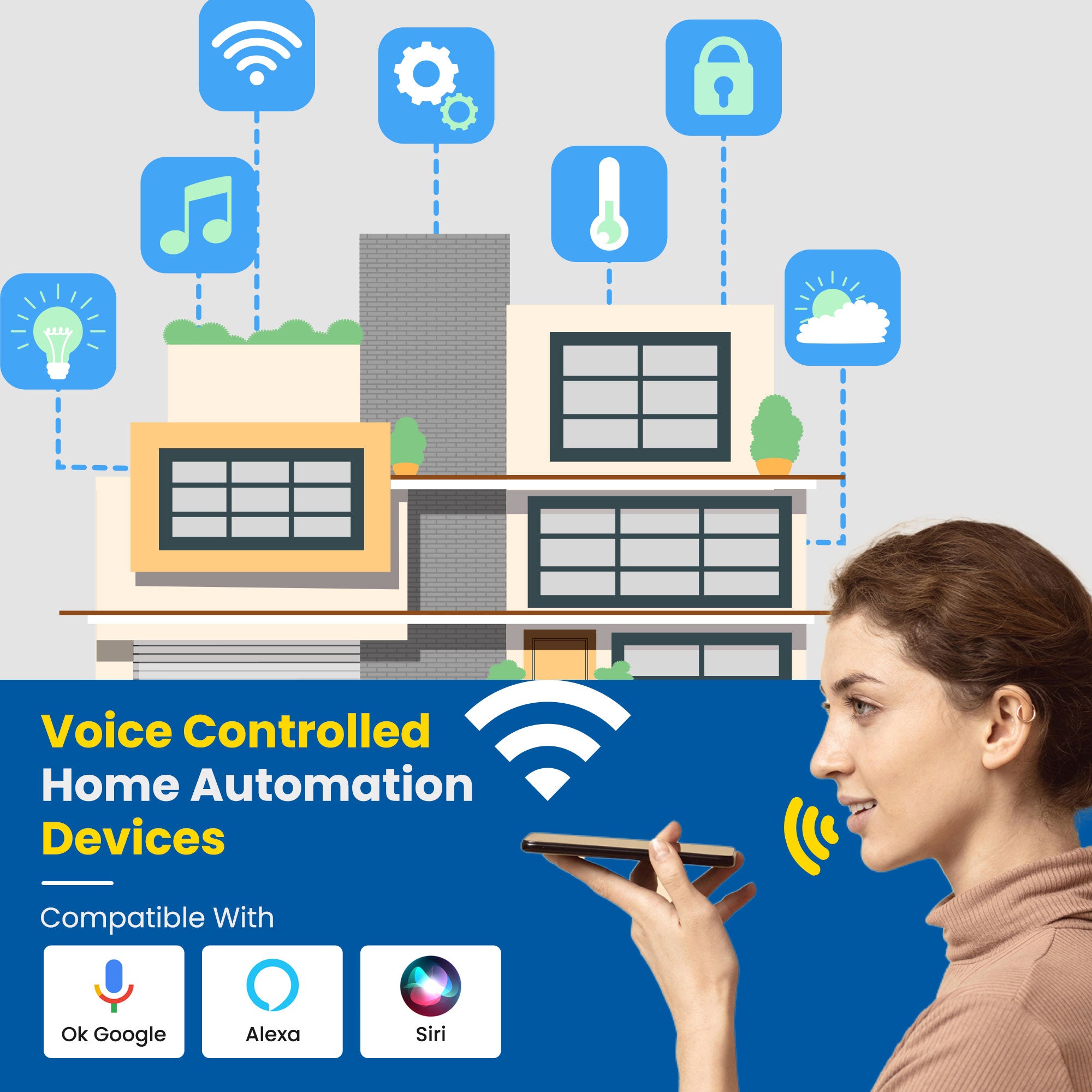
The assistant of 2030 will not live in one app.
It will likely move across:
- phones
- laptops
- earbuds
- smart glasses
- cars
- home devices
- work software
That is what makes the phrase personal assistant much more meaningful than chatbot.
A chatbot talks.
A personal assistant coordinates.
What will AI assistants actually do by 2030?
This is where the topic becomes exciting for real people instead of just tech headlines.
Predictive scheduling and time management
Most people are overloaded not because they lack calendars, but because they lack good coordination.
By 2030, assistants will likely:
- rearrange low-priority meetings when conflicts appear
- suggest travel adjustments based on traffic and delay patterns
- pre-read your day and flag preparation gaps
- remind you in the format you respond to best
- summarize what matters before an event starts
That turns the assistant into a daily operations layer for life.
Context-aware communication
Imagine an assistant that can:
- draft a reply in your tone
- summarize a 40-message thread
- highlight the one unanswered question in the conversation
- suggest whether a voice note, short message, or long email makes more sense
That is much closer to how real communication works than today's basic autocomplete systems.
Health and wellness support
This does not mean assistants will become doctors.
It does mean they will become much better at spotting patterns.
Connected wearables, sleep tracking, calendar context, nutrition apps, and daily routines can all feed into a smarter assistant layer that helps with:
- medication reminders
- sleep and recovery patterns
- fitness suggestions
- hydration habits
- stress signals
The privacy side here is huge, which is why on-device processing and user control will matter more, not less.
Shopping, errands, and life admin
This is where agent systems are already hinting at the future.
The assistant of 2030 may:
- reorder essentials
- compare product options based on your past preferences
- handle form filling
- manage booking sequences
- watch for price changes
- keep a personal memory of what you actually like
This matters because daily life is full of small tasks that do not require deep human creativity, just reliable execution.
Education and learning
Assistants will also become stronger learning companions.
They may:
- adapt explanations to your level
- spot weak areas in how you study
- give faster revision summaries
- turn notes into quizzes
- translate complex topics into simpler language
This is part of why the boundary between assistant, tutor, and productivity coach will blur over time.
Why personal assistants in 2030 may feel more human-like
This is not because they are human.
It is because they will be better at the three things that make interactions feel natural:
- continuity
- context
- timing
People call current tools robotic when the system forgets the thread, misses emotional context, or interrupts at the wrong moment.
Future assistants will improve because they will better understand:
- what you are doing
- what came before
- what probably matters next
That creates a stronger illusion of companionship, even if the system is still just software.
The biggest benefits of AI-powered assistants
1. Less friction in daily life
Most people do not need more apps. They need fewer small interruptions.
Good assistants reduce friction by helping tasks move without forcing constant switching.
2. Better personalization
The more context an assistant can safely manage, the more useful it becomes.
That makes the experience feel tailored rather than generic.
3. Higher productivity without constant manual setup
A great assistant does not just speed up one task.
It reduces the coordination cost between many tasks.
That is much more valuable.
4. More accessible technology
Voice, visual understanding, translation, and adaptive responses will make technology easier to use for more people, including users who struggle with traditional interfaces.
What are the biggest risks?
The future assistant story sounds great until you remember how much power a truly useful assistant would need.
That is the core tension.
To be helpful, an assistant needs access.
To stay safe, that access must be limited, transparent, and reversible.
Privacy risk
An assistant that understands your calendar, location, messages, shopping habits, health patterns, and routines could become incredibly valuable.
It could also become deeply invasive if data protections are weak.
Over-reliance
If assistants become too good at prioritizing, reminding, filtering, and deciding, people may gradually hand over more judgment than they realize.
Convenience can quietly become dependency.
Manipulation and bias
An assistant that suggests what to read, buy, respond to, or ignore has influence.
That means design choices, commercial incentives, and ranking logic matter a lot.
Security
A powerful assistant is also a powerful attack surface.
The more actions it can take, the more important it becomes to protect identity, device permissions, and sensitive workflows.
Will AI assistants replace phones?
Not fully, at least not quickly.
The better question is whether AI assistants will reduce how often the phone screen is the center of everything.
That seems much more likely.
Phones may stay important, but assistants could increasingly shift interaction toward:
- voice
- wearables
- earbuds
- glasses
- ambient displays
- proactive notifications
So the future may not be "no phone."
The future may be "less app-hopping."
How should people prepare for this future now?
You do not need to wait until 2030 to prepare for 2030-style assistants.
You can start paying attention to four things now:
1. Learn which assistant ecosystems are becoming action-oriented
The biggest change is not smarter chat. It is smarter action.
2. Get comfortable with multimodal workflows
The future assistant will not be text-only. It will work across images, voice, documents, screens, and physical context.
3. Protect your privacy habits early
If assistants become central to life, permission hygiene matters. Review what you connect and what you do not.
4. Think of assistants as collaborators, not authorities
The best future use is likely human-guided delegation, not blind obedience.
Final takeaway
The rise of AI-powered personal assistants in 2030 is not just a gadget story. It is a shift in how computing itself may feel.
Instead of opening apps, searching menus, and manually coordinating everything, people are moving toward systems that can understand goals, remember context, and support action across daily life.
That does not mean the future assistant will be perfect. It does not mean privacy, security, and over-reliance problems disappear. And it definitely does not mean every bold tech demo becomes mainstream on schedule.
But the direction is becoming clearer every year.
The assistant of 2030 will probably not just answer you.
It will increasingly understand the moment you are in, anticipate the task behind the request, and help move life forward with less friction than today's tools can manage.
That is why this trend matters now, not later.
About the publisher

Rajat
Automation Engineer · India
Automation Engineer | India
Rajat is an Automation Engineer building a practical space around AI generation, automation, and digital workflows. Through Prompt Insight, he helps students and professionals understand AI tools, work more efficiently, and find a clearer path through fast-moving technology.
Recommended tools
Tools that fit this workflow
AI assistant
ChatGPT
A flexible assistant for drafting, ideation, summarizing, and turning rough notes into usable work.
AI assistant
Gemini
Useful when your workflow already lives inside Google apps and you want AI help across that stack.
Research
Perplexity
Great for research-heavy tasks when you need a quick answer with links you can verify.
FAQ
Frequently asked questions
What is an AI-powered personal assistant?
It is an AI system that helps manage tasks, answers questions, understands context, and increasingly acts across apps, devices, and daily routines.
Will AI assistants replace smartphones by 2030?
Probably not completely, but they may reduce how often people need to open apps manually or interact through a phone screen.
Why are AI assistants becoming more powerful now?
Better multimodal models, agentic workflows, wearables, and device-level AI integration are all pushing assistants beyond simple voice commands.
What is the biggest risk of future AI assistants?
The biggest risk is giving one system too much access to personal data, decisions, and everyday behavior without clear user control.
Are 2030-style AI assistants already visible today?
Yes, early signals are already visible in agent tools, smart glasses, voice assistants with visual understanding, and more proactive device experiences.


