Editorial trust
How this article is handled
Prompt Insight articles may use AI-assisted research support, outlining, or drafting help, but readers should still verify time-sensitive details such as pricing, limits, and vendor policies on official product pages.
Review snapshot
What we checked for this guide
This article was built by checking current official signals around Ray-Ban Meta, Meta Orion, and Google's Android XR direction, then extending those trends into a grounded 2030 outlook focused on usability, privacy, and real-world adoption.
- We treated 2030 smart glasses as a likely growth area, but not as a guaranteed full smartphone replacement for every user.
- The guide separates current wearable AI features from future possibilities like persistent contextual overlays and deeper ambient assistance.
- Social acceptance, battery life, and privacy are included because they will shape adoption as much as hardware innovation does.
Why it helps
Strong points readers should notice
- The article connects current product launches to the larger 2030 wearable-computing shift in a practical way.
- It explains why smart glasses matter beyond novelty by focusing on convenience, context, and hands-free computing.
- The topic is strong for Discover because it combines future tech, daily-life relevance, and a visually compelling trend.
Watchouts
Limits worth knowing up front
- Smart glasses still face major design challenges around comfort, price, and all-day usefulness.
- Public adoption may stay limited if privacy concerns or awkward social dynamics are not solved well.
Official sources used
Pages checked while updating this article
For years, smart glasses felt like a category that was always about to happen.
The demos looked exciting. The headlines sounded futuristic. But the actual products usually felt too expensive, too awkward, too limited, or too disconnected from what normal people really needed.
That is why the smart-glasses story in the late 2020s feels different.
The technology is still early, but it is no longer directionless.
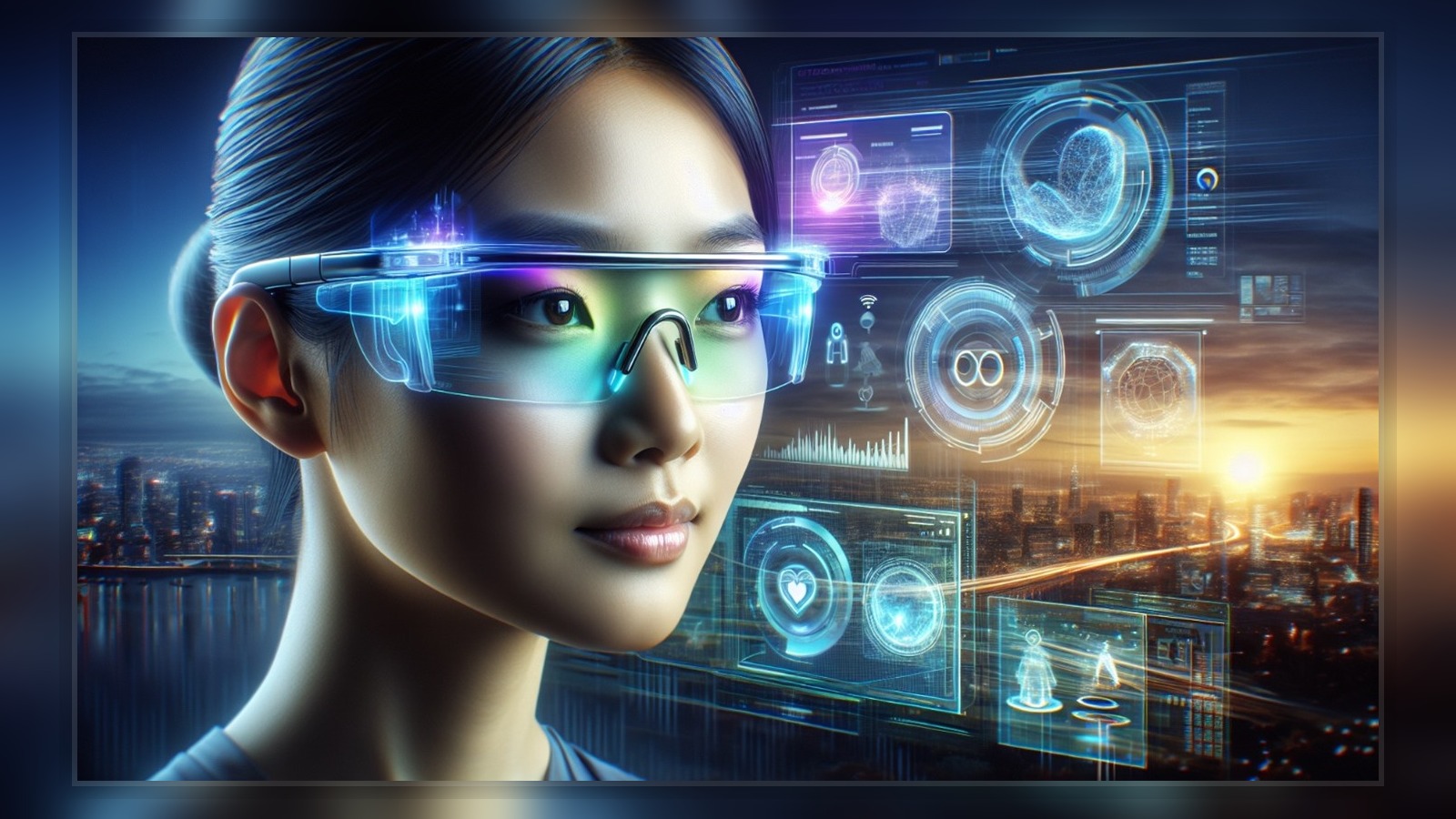
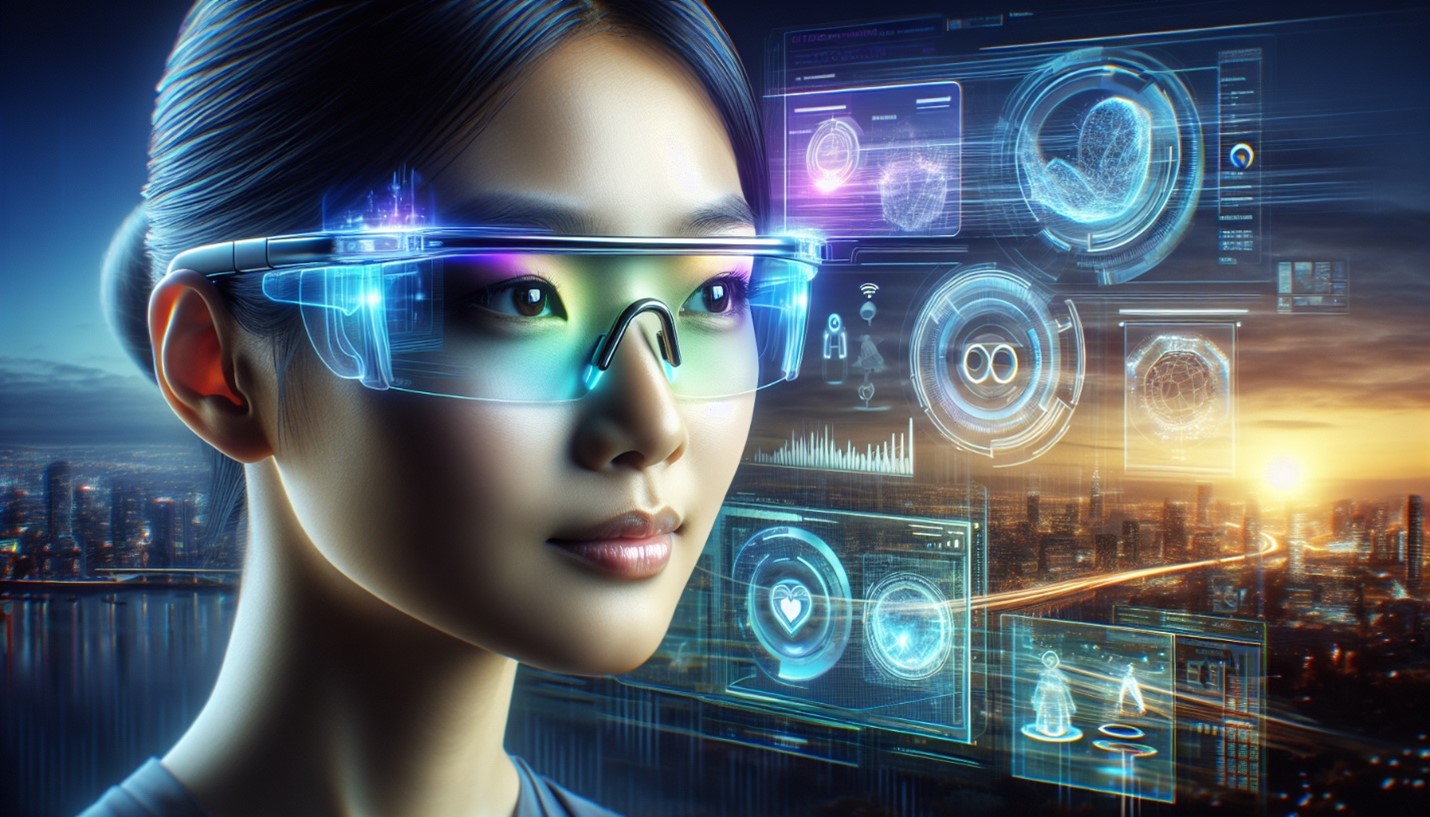
Meta has already pushed AI glasses into mainstream conversation through Ray-Ban Meta. Google has outlined Android XR as a platform where Gemini can support glasses with navigation, translation, and contextual help. Meta's Orion prototype signaled that augmented-reality wearables are not just theoretical ambition anymore.
Taken together, these developments point toward a bigger shift:
By 2030, AI smart glasses may become the most important new personal-computing form factor after the smartphone.
That does not mean everyone will throw away their phones.
It does mean the center of digital interaction could start moving upward from the hand to the face.
That would change everything from navigation to messaging to shopping to work to how AI assistants show up in daily life.
If you want the bigger assistant trend first, read The Rise of AI-Powered Personal Assistants in 2030.
What are AI smart glasses, really?
The simple answer is that they are glasses with connected digital features.
The better answer is that they are an attempt to turn computing into something more natural, more ambient, and less screen-dependent.
AI smart glasses usually combine some mix of:
- cameras
- microphones
- speakers or audio output
- wireless connectivity
- AI assistance
- sensors
- in some cases, visual overlays or AR displays
The goal is not just to put technology on your face.
The goal is to reduce the need to constantly pull out a phone, open an app, type a search, or interrupt what you are doing.
That is why AI matters so much here.
Without AI, smart glasses are mostly cameras with notifications.
With AI, they start becoming context-aware assistants.
Why smart glasses are trending now instead of fading again
This is the core question.
Why does the category feel more real now than it did in earlier failed smart-glasses waves?
Because three things are improving at the same time:
- wearable hardware
- AI assistants
- interface design
Earlier smart glasses tried to make glasses behave like tiny screens.
The new wave is more interesting because it asks a different question:
What if glasses became the best place for lightweight, hands-free AI?
That is a much stronger use case.
It is one thing to look at a cramped display hovering in your vision.
It is another thing entirely to:
- ask a question naturally
- hear the answer privately
- see directions without reaching for a phone
- translate speech in the moment
- capture information without stopping what you are doing
- get relevant context exactly when it matters
That is why the category finally has momentum.
What signals tell us smart glasses could be huge by 2030?
1. Ray-Ban Meta made AI glasses feel less weird
This point matters more than many people admit.
Mainstream adoption does not happen only because the technology works. It happens when people are willing to wear the product.
Ray-Ban Meta helped normalize the idea that glasses can be both stylish and functional. That matters because social acceptability has always been one of the hardest parts of wearable tech.
The more AI gets added to glasses people already want to wear, the stronger the category becomes.
2. Meta Orion showed the long-term ambition clearly
Meta's Orion announcement mattered because it made the next phase of AR wearables feel tangible. Even if Orion itself is not a mass-market 2030 product in its current form, it showed where the category wants to go:
- lightweight visual overlays
- contextual digital objects
- more natural interaction
- less screen dependence
That is a major vision shift.
3. Google is treating glasses as part of the Gemini era
Google's Android XR direction is important because it treats glasses as part of a broader AI computing stack rather than a one-off gadget experiment.
That is key.
If glasses live inside a wider platform that includes AI models, mobile integration, maps, translation, and assistant workflows, they become much more useful.
That is exactly why 2030 smart glasses may grow faster than earlier wearable experiments did.
What will AI smart glasses actually do by 2030?
This is where the future becomes practical instead of abstract.
Real-time navigation without constant phone checking
This is one of the clearest near-term wins.
Instead of pulling out a phone every few minutes while walking or traveling, glasses can provide:
- turn prompts
- place identification
- transit context
- timing cues
That makes navigation feel less disruptive and more natural.
Live translation and multilingual assistance
This is another powerful use case because it solves a real friction point immediately.
Smart glasses could become extremely useful for:
- travelers
- international students
- customer-facing workers
- multicultural teams
If AI can hear speech, translate it, and present the output naturally through audio or subtle visual support, language barriers become less intimidating in everyday moments.
Instant context about the world around you
This may be the most transformative part.
By 2030, smart glasses could help with:
- recognizing objects
- identifying landmarks
- summarizing signs or menus
- surfacing reminders tied to location
- giving product or environment context on demand
This is where glasses stop being just accessories and start acting like real perception layers.
Hands-free messaging and communication
A future pair of smart glasses may let you:
- hear a message summary
- reply with voice
- see the key part of a notification
- ignore noise more intelligently
That would reduce a huge amount of low-value phone checking throughout the day.
Work and field productivity
Smart glasses may become especially useful for:
- warehouse staff
- field technicians
- healthcare workers
- logistics teams
- creators and journalists
In these settings, hands-free AI support is not just convenient. It can directly improve speed and accuracy.
What makes AI the difference-maker?
The earlier smart-glasses problem was partly a hardware problem, but it was also a software problem.
The device did not know enough about what the user needed in the moment.
AI changes that.
AI can make glasses feel useful because it can help decide:
- what matters now
- what to show
- what to say
- when to stay quiet
- when to summarize
- when to wait for user intent
That is why smart glasses and AI assistants are such a natural fit.
The glasses provide the position.
The assistant provides the intelligence.
Could smart glasses really replace the phone?
This is where people usually jump too far ahead.
The honest answer is:
They may replace many phone moments before they replace the phone itself.
That distinction matters.
Your phone is still powerful because it handles:
- deep typing
- long-form reading
- rich app use
- payments
- content creation
- gaming
- private browsing
Smart glasses are not likely to beat phones at all of that by 2030.
But they may absolutely beat phones at:
- quick context
- lightweight search
- reminders
- real-world overlays
- hands-free assistance
- navigation
- voice-first interaction
So the real future may not be "glasses replace phones overnight."
It may be "phones become secondary more often."
That is still a major shift.
What are the biggest benefits of AI smart glasses?
1. Less screen friction
People do not always want to stop, unlock a device, and dive into an app.
Glasses can reduce that friction dramatically.
2. More natural access to AI
AI feels more useful when it fits into the moment instead of forcing a separate interaction every time.
3. Better support while moving
Walking, traveling, shopping, commuting, and working in the physical world are all stronger use cases for glasses than for stationary screen-heavy devices.
4. Stronger accessibility potential
AI smart glasses could also support accessibility through audio guidance, scene understanding, reading help, and real-time contextual prompts.
What are the biggest obstacles?
This is the section many futuristic articles skip.
Smart glasses are exciting, but they still face hard problems.
Battery life
Useful AI, cameras, sensors, wireless connectivity, and display layers all consume power.
All-day glasses need better battery strategies than most current designs offer.
Comfort and design
If the product is heavy, awkward, or unattractive, adoption will stay limited.
Wearables succeed when people forget they are wearing technology.
Privacy
Cameras and always-available assistance create trust issues fast.
If people feel watched, glasses adoption can stall regardless of how impressive the features are.
Social acceptance
This is related to privacy but slightly different.
A device can be technically useful and still socially uncomfortable. The companies that win here will likely be the ones that make the device feel polite, not invasive.
Cost
High-end wearable computing will not become mainstream if pricing stays far above ordinary consumer comfort.
Who will adopt AI smart glasses first?
Not everybody at once.
The strongest early groups may include:
- travelers
- creators
- field workers
- accessibility-focused users
- early adopters who already use AI daily
- professionals who benefit from quick contextual help
That is usually how new platforms spread. They become obviously useful for a few groups first, then improve enough for everyone else.
Why this trend matters for the bigger AI future
AI smart glasses are important because they show where personal computing may be headed:
- less typing
- less app switching
- more context
- more voice
- more ambient intelligence
- more AI in motion instead of only at a desk
In that sense, smart glasses are not just about wearables. They are about the next interface layer for AI.
And that is why this trend is bigger than one product line.
Final takeaway
AI smart glasses in 2030 may become one of the most important shifts in consumer technology, not because they look futuristic, but because they solve a real problem:
People are tired of constant screen dependence.
The next big computing platform may not be the device that demands more attention. It may be the one that gives useful information with less friction, less interruption, and better timing.
That is the real promise of AI smart glasses.
They are not just trying to put a screen in front of your eyes.
They are trying to turn AI into something more ambient, more wearable, and more present in the real world.
If that works, the future of personal technology may look less like a phone in your hand and more like a quiet assistant living at the edge of your vision.
About the publisher

Rajat
Automation Engineer · India
Automation Engineer | India
Rajat is an Automation Engineer building a practical space around AI generation, automation, and digital workflows. Through Prompt Insight, he helps students and professionals understand AI tools, work more efficiently, and find a clearer path through fast-moving technology.
Recommended tools
Tools that fit this workflow
AI assistant
Gemini
Useful when your workflow already lives inside Google apps and you want AI help across that stack.
AI assistant
ChatGPT
A flexible assistant for drafting, ideation, summarizing, and turning rough notes into usable work.
Research
Perplexity
Great for research-heavy tasks when you need a quick answer with links you can verify.
FAQ
Frequently asked questions
What are AI smart glasses?
AI smart glasses are wearable displays or connected glasses that combine cameras, sensors, audio, and AI assistance to deliver hands-free information and tasks.
Will smart glasses replace smartphones by 2030?
They may replace some phone interactions, but for most people they are more likely to become a companion device first before replacing the phone fully.
Why are AI smart glasses trending now?
Better AI models, improved wearables, AR prototypes, and hands-free assistant experiences are making smart glasses much more practical than earlier generations.
What is the biggest challenge for smart glasses?
Battery life, comfort, privacy, and real everyday usefulness are still the biggest barriers.
Are AI smart glasses already useful today?
Yes, in a limited way. Current devices can already support voice help, photo capture, translation, and lightweight assistant interactions.


