Editorial trust
How this article is handled
Vehicle Insight articles may use AI-assisted research support, outlining, or drafting help, but readers should still verify time-sensitive details such as pricing, variants, safety equipment, mileage, and dealer offers on official brand or retailer pages.
Review snapshot
What we checked for this guide
This article was written by checking current official material from NHTSA, Waymo, NVIDIA, and Tesla so the post stays grounded in what AI-powered vehicles can really do in 2026 instead of repeating generic self-driving hype.
- We explain clearly that no fully automated consumer vehicle is currently sold for ordinary unrestricted use, even though advanced driver assistance and geofenced autonomous services are expanding.
- The article distinguishes between AI-powered cars, driver-assistance systems, and true autonomous operation because those terms are often mixed together.
- The future section stays forward-looking, but it does not claim that Level 5 autonomy is already solved or ready for mainstream mass adoption.
Why it helps
Strong points readers should notice
- The article balances excitement about AI-driven mobility with realistic safety, regulatory, and cost constraints.
- It covers the full AI car stack, from perception and sensor fusion to edge computing, predictive maintenance, and smart-city integration.
- The post fits strongly into your future-tech cluster and connects naturally with robotaxis, smart cities, and autonomous transport content.
Watchouts
Limits worth knowing up front
- AI in cars is evolving quickly, so brand-specific capabilities and rollout timelines can change.
- Many readers still confuse driver assistance with full autonomy, which means expectations can get ahead of real-world capability.
Official sources used
Pages checked while updating this article
Cars are no longer only mechanical machines.
That shift is easy to miss if you only look at the steering wheel, the battery, or the shape of the vehicle itself. But under the surface, the automotive industry is going through one of the biggest technology transformations in its history.
The modern car is becoming a software system.
And once cars become software systems, artificial intelligence becomes one of the most important layers shaping how they behave.
That is why the phrase Intelligent Wheels feels so accurate in 2026.
Cars are no longer only designed to move. They are being designed to:
- sense their surroundings
- predict what might happen next
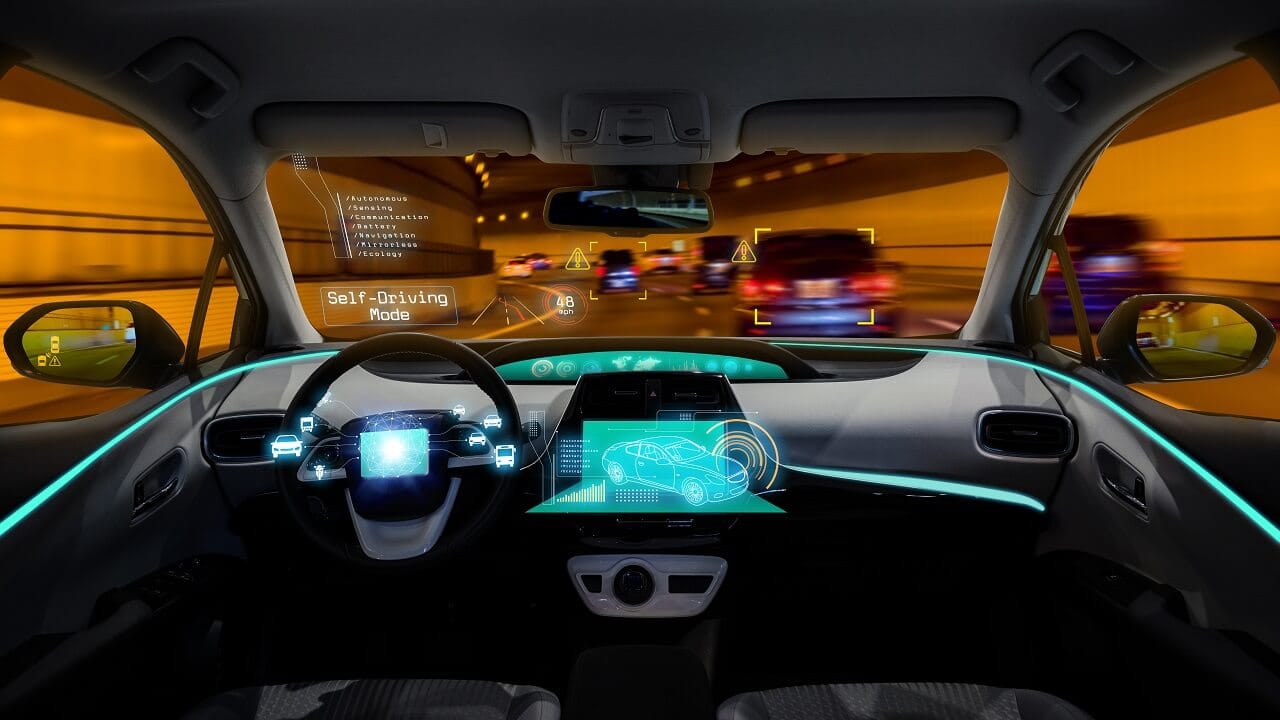
- assist drivers in real time
- learn from massive datasets
- optimize routes and efficiency
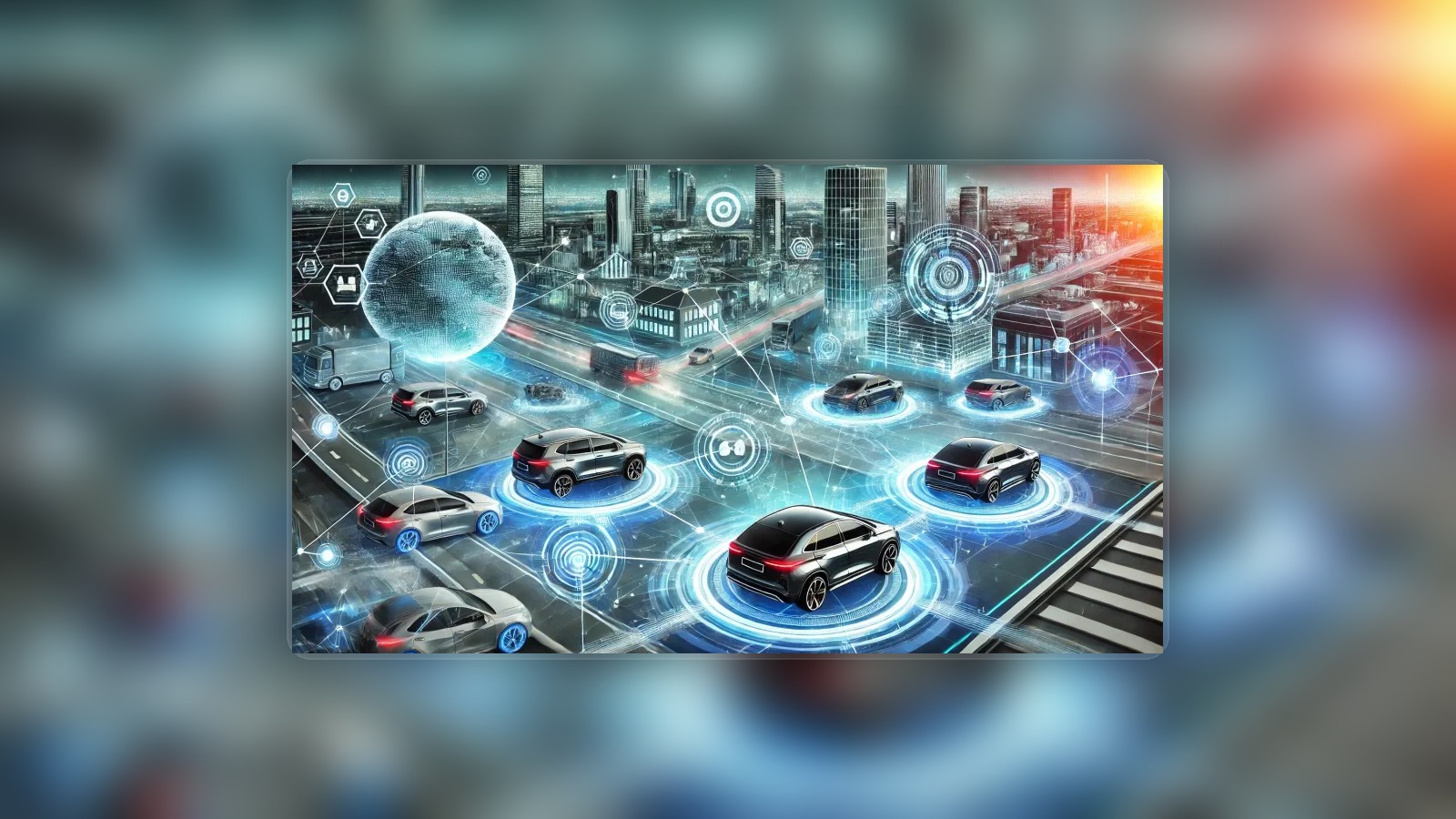
- connect with infrastructure and other digital systems
In other words, AI is turning vehicles into intelligent mobility platforms.
That does not mean every car is fully autonomous today. It does not mean robotaxis are replacing all ordinary driving tomorrow. And it definitely does not mean the industry has solved every safety and regulatory challenge.
But it does mean the future of mobility is no longer just about better engines or better batteries.
It is increasingly about better intelligence.
This article looks at what AI-powered cars really are, which technologies are making them possible, why the industry is moving in this direction, what is already real in 2026, and what the future may look like as intelligent vehicles become more deeply connected to everyday life.
If you want the robotaxi side of this trend after this, read Tesla Cybercab in 2026. If you want the infrastructure side, read AI Smart Cities in 2026.
What are AI-powered cars?
AI-powered cars are vehicles that use artificial intelligence, machine learning, advanced sensors, and real-time computing to help perform tasks that once depended entirely on human perception and judgment.
That can include:
- detecting lanes
- recognizing pedestrians
- monitoring other vehicles
- assisting with braking
- keeping the car centered
- suggesting better routes
- tracking component health
- enabling autonomous behavior in some environments
The important thing to understand is that AI in cars exists on a spectrum.
Some vehicles use AI mainly for advanced driver assistance. Others use it for fleet safety, predictive maintenance, or infotainment. And in more advanced autonomous systems, AI helps the vehicle understand the road, predict motion, and plan driving decisions continuously.
That is why not every "AI car" is a fully self-driving car.
Some intelligent cars still require complete driver control.
Some support partial automation.
Some ride-hailing systems operate autonomously only in tightly controlled, geofenced service areas.
That distinction matters because public marketing often makes the category sound more uniform than it really is.
How AI works inside a modern car
Most people imagine AI in cars as one giant brain doing everything at once.
In reality, it is usually a stack of connected systems working together.
Machine learning and deep learning
Machine learning helps the system improve through data. Deep learning is especially useful for recognizing patterns in images, video, and sensor streams.
This is how modern vehicles become better at things like:
- identifying objects
- understanding road edges
- recognizing signs
- predicting pedestrian movement
- classifying nearby vehicles
Computer vision
Computer vision gives the car a way to interpret the visual world around it.
That includes:
- traffic lights
- lane markings
- construction zones
- obstacles
- road geometry
- dynamic movement in crowded urban environments
Without strong computer vision, higher levels of automation are extremely difficult.
Sensor fusion
No single sensor is enough in every condition.
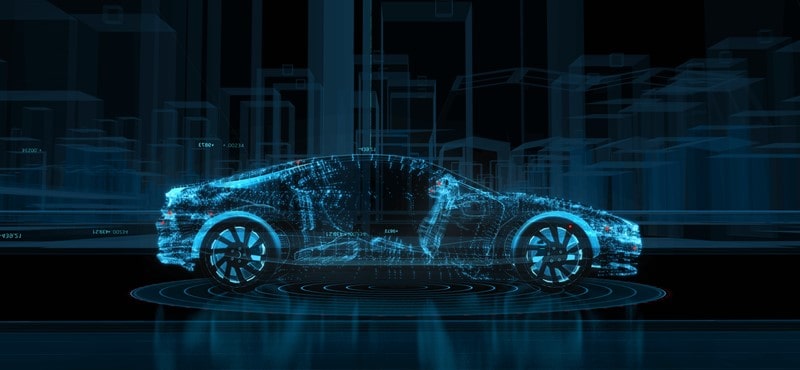
That is why intelligent vehicles use sensor fusion, which combines inputs from:
- cameras
- radar
- lidar in some systems
- ultrasonic sensors
- GPS and mapping layers
By combining these inputs, the vehicle gets a more reliable view of the environment than one sensor could provide alone.
Edge computing
Cars cannot wait for distant cloud servers when a decision must happen immediately.
That is why edge computing matters so much in mobility. AI decisions must often happen inside the vehicle, in real time, with very low latency.
This becomes essential for:
- braking decisions
- lane adjustments
- obstacle response
- speed adaptation
- emergency interventions
Natural language interfaces
AI in cars is not only about driving.
Natural language processing also improves how people interact with the vehicle itself. Voice-driven controls now handle:
- navigation
- calls
- media
- climate settings
- search
- in-car assistance
This makes the car feel more like a connected assistant and less like a static machine.
Understanding the levels of automation
One of the biggest sources of confusion in the automotive world is automation level.
According to NHTSA, the road to full automation is divided into levels ranging from no automation to full automation.
Level 0
No automation beyond warnings or basic interventions.
Level 1
Driver assistance for either steering or acceleration/braking.
Level 2
Partial automation, where the system can help with steering and speed control together, but the driver must remain fully attentive.
Level 3
Conditional automation under limited conditions, where the system can handle more of the driving task but still expects a human fallback.
Level 4
High automation in specific conditions or geofenced areas. This is where some robotaxi services begin to operate meaningfully.
Level 5
Full automation in all conditions with no need for a human driver.
The truth that matters most in 2026 is this:
NHTSA says there is no fully automated vehicle currently available for sale to consumers in the United States. That means many vehicles with advanced assistance still require full driver engagement and supervision.
That is an important reality check in a topic filled with aggressive marketing.
What are the biggest benefits of AI in cars?
Enhanced safety
This is still the most important promise.
Humans get tired, distracted, impatient, and inconsistent. AI systems, while imperfect, can help reduce some of those human limitations by monitoring the environment constantly and reacting quickly to threats.
That does not mean AI is flawless.
It means it can support safer decisions in situations where reaction speed and constant attention matter.
Reduced traffic congestion
AI can help improve traffic flow by:
- choosing better routes
- anticipating slowdowns
- coordinating with real-time traffic systems
- enabling smarter city-level transport decisions
This is where vehicles and urban infrastructure increasingly overlap.
Better fuel efficiency and sustainability
AI can help optimize:
- acceleration patterns
- braking patterns
- route efficiency
- energy usage
- fleet management
When combined with electric vehicles, those gains can also support broader sustainability goals.
Accessibility and inclusion
AI-powered mobility could eventually make transportation far more accessible for:
- older adults
- people with disabilities
- non-drivers
- communities with poor conventional mobility access
This is one of the most socially important long-term benefits of intelligent mobility.
Greater convenience
From parking assistance to route prediction to voice interaction, AI already reduces driving friction in everyday use.
That convenience layer may not be as dramatic as full self-driving, but for many users it is the first place AI becomes genuinely valuable.
Real-world applications that already exist
This is the part where the conversation becomes more real.
AI in cars is not only about future ambition. Many of the most useful applications are already here.
Adaptive cruise control and lane assistance
These are among the most familiar AI-supported driving features.
They help the vehicle:
- maintain distance
- stay centered in lane
- reduce fatigue on highways
Automatic emergency braking
This is one of the clearest safety examples of intelligent intervention.
If the system detects an imminent collision, it can act faster than many drivers would.
Parking and low-speed maneuvering
AI-supported parking systems reduce stress and improve precision in tight spaces.
Predictive maintenance
Cars are increasingly able to analyze system performance and detect patterns that suggest:
- battery issues
- tire problems
- engine or drivetrain stress
- service needs
This is a powerful but under-discussed part of intelligent mobility. Sometimes the smartest car feature is not autonomous driving at all. It is knowing when something is about to fail.
Robotaxi and autonomous ride services
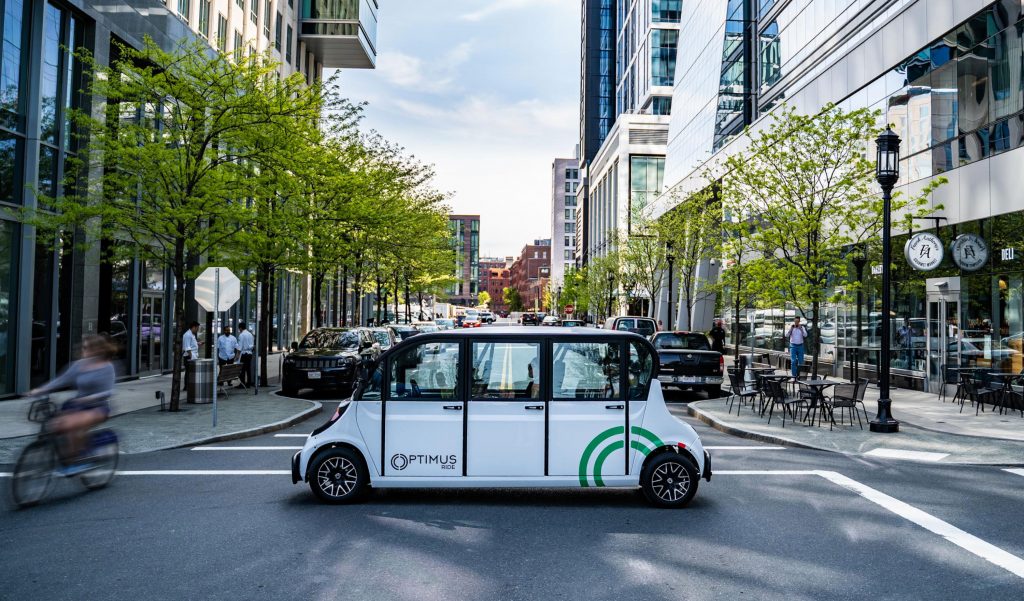
Waymo is one of the strongest examples here. The company describes the Waymo Driver as an autonomous driving technology built around detailed mapping, real-time sensor data, and AI. Waymo has also grown its real-world autonomous ride operations, which matters because it proves that autonomous mobility is not only experimental in every context.
But it is still important to stay precise:
- these services operate in specific environments
- they do not prove full universal autonomy everywhere
- they are very different from unrestricted consumer self-driving
That distinction helps readers separate reality from hype.
What are the biggest challenges?
AI in mobility is exciting, but this is not a solved industry story.
Safety and reliability
The biggest issue is still real-world complexity.
Road environments include:
- unpredictable people
- weather
- poor visibility
- construction
- ambiguous signage
- unusual edge cases
Handling all of that consistently is far harder than handling clean demo conditions.
Regulation
Governments are still building the frameworks needed for testing, deployment, reporting, and safety oversight.
That means technical progress alone is not enough.
Public deployment also depends on policy.
Cost
Advanced autonomy stacks can be expensive. Sensors, computing platforms, validation systems, and safety processes all increase vehicle cost.
Data privacy
Connected intelligent vehicles generate large amounts of data. That creates questions about:
- location tracking
- driver behavior
- passenger data
- cloud connectivity
- data ownership
Public trust
People do not adopt mobility technology only because it works in a lab. They adopt it when it feels safe, understandable, and socially legitimate.
Public trust is one of the industry's biggest invisible barriers.
The future of AI in cars
The future of mobility is not just autonomous.
It is connected, adaptive, and increasingly integrated into a wider urban and digital ecosystem.
Fully autonomous vehicles will keep advancing, but selectively
The path to broader autonomy will likely happen through:
- robotaxi fleets
- logistics routes
- controlled environments
- premium assisted-driving systems
Mass-market unrestricted Level 5 adoption will probably take longer than many headlines suggest.
Cars will connect more deeply with smart cities
AI-powered mobility works better when the environment is smarter too.
That means more interaction with:
- traffic systems
- urban sensors
- road infrastructure
- public transport layers
- digital twins of city movement
This is one reason intelligent vehicles and smart-city systems increasingly belong in the same conversation.
Mobility as a service will grow
In some markets, the future may involve fewer personally owned fully autonomous cars and more shared AI-driven transport networks.
That could reduce:
- parking pressure
- cost per trip
- congestion in some areas
- wasted vehicle utilization
Personalization will improve
AI will increasingly learn user preferences around:
- route choices
- comfort settings
- safety alerts
- entertainment
- seat and climate preferences
That makes the vehicle feel more like a personalized digital environment.
Vehicle intelligence will extend beyond driving
The smartest cars of the future may not only drive better.
They may also:
- maintain themselves better
- communicate with surrounding systems better
- adapt to owners better
- support fleets better
That broader intelligence layer may end up being just as important as autonomy itself.
Final takeaway
Intelligent wheels are no longer a concept for sci-fi movies or prototype labs.
AI is already reshaping how vehicles see, respond, assist, optimize, and interact with the world around them. In 2026, that transformation is visible in driver assistance, autonomous ride services, smart navigation, predictive maintenance, and connected urban mobility.
The most important thing to understand is this:
The future of cars is not only electric.
It is intelligent.
That does not mean the industry has solved every challenge. Safety, regulation, cost, and trust are still major issues. And fully autonomous mainstream consumer driving remains further away than many casual headlines imply.
But the direction is clear.
Vehicles are becoming more aware, more connected, and more capable of supporting decisions once handled entirely by humans.
That is why "Intelligent Wheels" is more than a catchy phrase.
It is the best way to describe a transportation future where cars are not just machines on the road, but intelligent systems inside a much larger AI-powered mobility network.
About the publisher

Rajat
Automobile Trends Editor | India
Automobile Trends Editor | India
Rajat edits Vehicle Insight as a practical automobile publication focused on new launches, car and bike reviews, EV updates, safety features, ownership costs, and future mobility trends for Indian readers.
Recommended tools
Tools that fit this workflow
Research
Perplexity
Great for research-heavy tasks when you need a quick answer with links you can verify.
AI assistant
Gemini
Useful when your workflow already lives inside Google apps and you want AI help across that stack.
AI assistant
ChatGPT
A flexible assistant for drafting, ideation, summarizing, and turning rough notes into usable work.
FAQ
Frequently asked questions
What are AI-powered cars?
AI-powered cars use software, sensors, machine learning, and real-time computing to support driving decisions, safety, navigation, and in some cases autonomous operation.
Are self-driving cars fully available in 2026?
Not for ordinary unrestricted consumer use. Some geofenced autonomous ride services exist, but consumer vehicles still require driver attention and supervision.
What is the biggest benefit of AI in cars?
The biggest benefit is safer and more efficient driving support through perception, faster reaction, route optimization, and better awareness of road conditions.
What is sensor fusion in self-driving cars?
Sensor fusion is the process of combining data from cameras, radar, lidar, and other systems so the vehicle gets a stronger real-time understanding of its surroundings.
What is the biggest challenge for AI cars?
Safety and reliability in unpredictable real-world conditions remain the biggest challenge, followed closely by regulation, cost, and public trust.