Editorial trust
How this article is handled
Prompt Insight articles may use AI-assisted research support, outlining, or drafting help, but readers should still verify time-sensitive details such as pricing, limits, and vendor policies on official product pages.
Review snapshot
What we checked for this guide
This guide was written by checking current reporting around 2026 eVTOL and jet-bike prototypes, plus FAA material on advanced air mobility, so the article stays grounded in real progress and real limits.
- We framed this as an early-stage but meaningful transport trend, not as proof that personal flying vehicles are ready for mass everyday commuting.
- We used examples such as LEO Flight's JetBike and Doroni's H1-X to show why the category is trending, while keeping the article honest about certification, safety, noise, and cost barriers.
- The article distinguishes between prototypes, demonstrations, and actual large-scale consumer readiness, which are often blurred together in viral gadget coverage.
Why it helps
Strong points readers should notice
- The guide turns a hype-heavy topic into a realistic explainer readers can actually trust.
- It uses multiple examples to show why personal eVTOLs are trending instead of relying on one headline gadget.
- The article is highly clickable for Discover while still grounded in transportation and regulatory realities.
Watchouts
Limits worth knowing up front
- Many flying-vehicle companies are still in prototype or pre-certification stages, so timelines can change sharply.
- Personal eVTOLs remain expensive, technically complex, and difficult to scale into ordinary mass-market commuting.
Official sources used
Pages checked while updating this article
For a long time, flying cars lived in the same mental category as jetpacks: fun to imagine, easy to click on, and probably always a little too futuristic to treat seriously.
That is what makes 2026 different.
No, the average commuter is not flying over traffic in a personal pod yet. No, urban skylines have not been turned into sci-fi transit lanes. And no, personal flying machines are not about to replace ordinary cars in the next few months.
But something important has changed anyway.
Flying vehicles no longer feel like pure fantasy. They feel like an active engineering race.
That shift matters. Once a category moves from concept art into prototypes, public showcases, early regulation work, and actual product roadmaps, people stop asking whether it is science fiction and start asking better questions:
- Which companies are closest to something usable?
- What still blocks adoption?
- Who will use these first?
- How safe and expensive will they be?
- Will personal air mobility grow faster than some people expect?
That is exactly why flying cars and jet bikes are trending so heavily in 2026.
The story is no longer built only on imagination. It is now built on visible prototypes, corporate ambition, and the very real possibility that some version of personal vertical mobility will enter the market before many people expected.
If you want the road-based future-mobility angle after this, read Tesla Cybercab in 2026: Why the Robotaxi Dream Suddenly Feels Real.
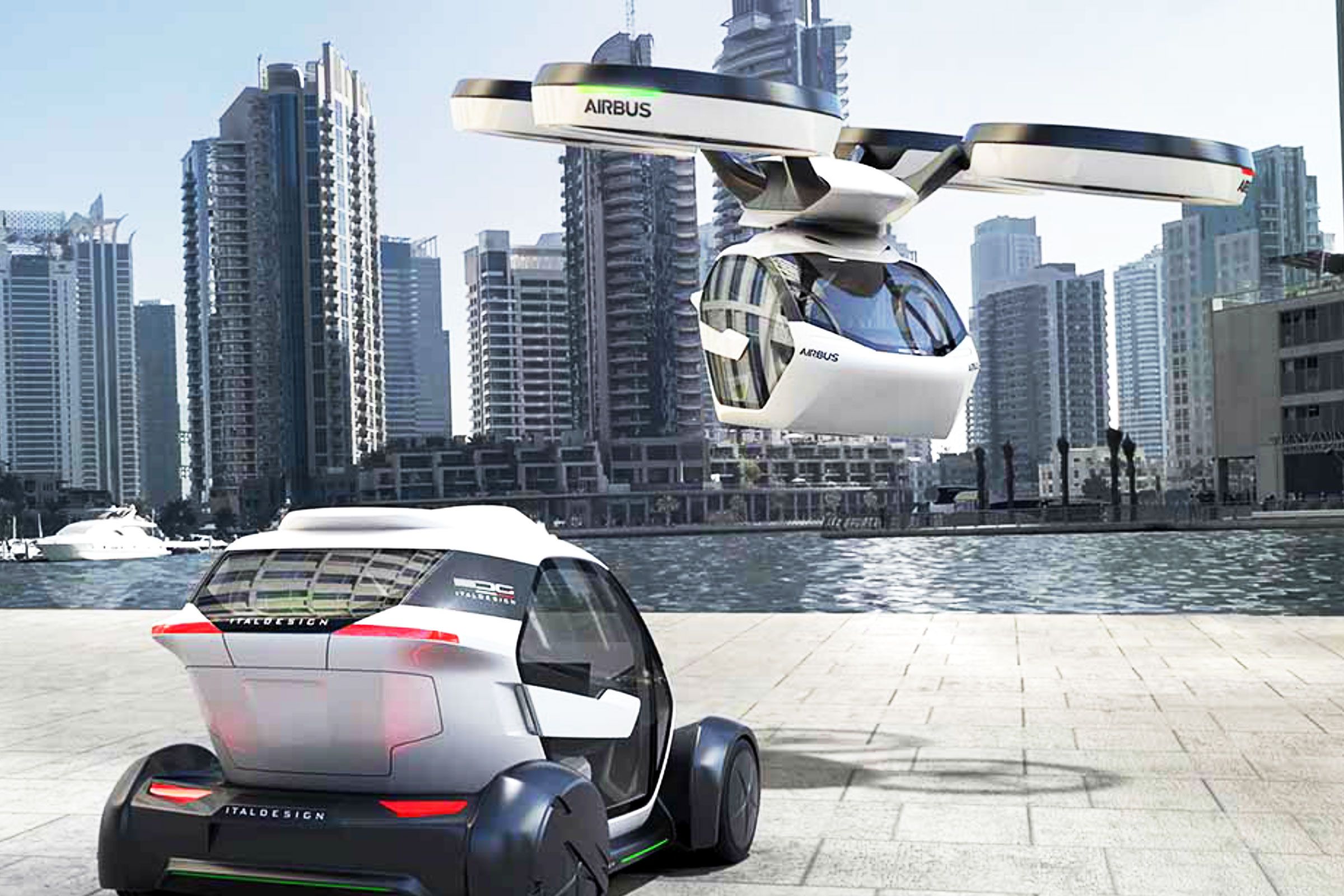
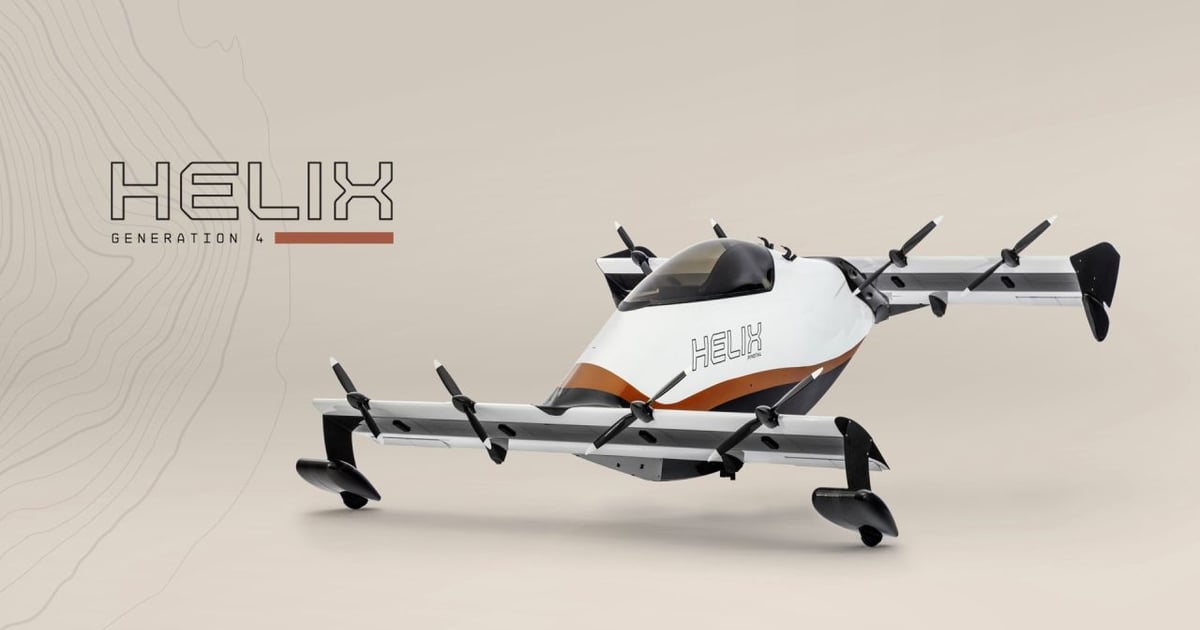
What does eVTOL actually mean?
Before getting into flying cars and jet bikes specifically, it helps to simplify the core term that keeps showing up in this space.
eVTOL stands for electric vertical takeoff and landing aircraft.
That means a vehicle designed to:
- take off vertically
- land vertically
- rely heavily on electric propulsion
- avoid the need for a traditional runway
This matters because eVTOLs are one of the most serious bridges between helicopter-like flexibility and the cleaner, software-driven future of electric aviation. The FAA's advanced air mobility work makes it clear that this is no longer just a speculative gadget conversation. Regulators are thinking about how future air taxis and related aircraft may fit into real operations and airspace frameworks.
That is a major shift in itself. When regulators start organizing around a category, the category has moved beyond fantasy.
Why are flying cars and jet bikes trending so hard now?
Because the category finally has enough proof points to feel real.
Those proof points include:
- public prototype reveals
- CES showcases
- polished working concepts
- stronger media coverage
- more serious investor attention
- evolving regulatory discussion
This matters because people usually ignore futuristic transport ideas until they start seeing hardware. In 2026, there are enough visible examples for the category to feel tangible.
Two examples show why.
Example 1: LEO Flight JetBike
LEO Flight's JetBike captured attention because it looks like a machine pulled directly from a video game or sci-fi film. But the deeper reason it matters is that it expands the public imagination around what personal air mobility might look like. It suggests that the future of individual flying transport might not be limited to small car-shaped aircraft.
Notebookcheck's CES 2026 coverage helped move that idea beyond aviation insiders and into mainstream tech curiosity.
Example 2: Doroni H1-X and personal eVTOL concepts
Doroni's H1-X is interesting because it frames personal flight in a more premium, enclosed, mobility-product style. Axios' March 2026 coverage helped show that this category is still evolving quickly and still trying to prove that personal air vehicles can be more than flashy renderings.
Together, those examples explain the current trend. This is no longer one futuristic concept repeated in different colors. It is becoming a broader design and engineering space.
Are flying cars actually close, or is this still mostly hype?
The honest answer is in the middle.
Flying vehicles are closer than they were a few years ago.
They are also still much farther from mainstream adoption than many viral posts imply.
That tension is exactly what makes the topic worth covering seriously.
The technology is real enough to matter because:
- prototypes exist
- companies are building hardware
- regulators are planning for future categories
- media attention is following real developments
But it is still early because:
- certification is difficult
- safety standards are high
- infrastructure is missing
- cost remains a major barrier
- public trust is not automatic
So the right conclusion is not "flying cars are here" and it is not "flying cars are fake." The more accurate conclusion is that the industry has entered the messy middle stage where the idea is technically real but not yet socially normal.
Why do jet bikes matter so much to the story?
Because they show the category is diversifying.
If the future of personal flight were built only around enclosed flying-car renderings, it would be easier to dismiss the whole field as a design fantasy. But when you start seeing:
- flying pods
- compact eVTOLs
- jet-bike style concepts
- short-hop commuter aircraft
the category begins to look more like an emerging industry than a single wild idea.
That is important because real industries rarely emerge from one perfect design. They emerge from a messy period where multiple companies try different shapes, experiences, and use cases until the market learns what actually works.
Jet-bike concepts capture that experimentation well. They push people to imagine personal flight in a more individual, agile, emotionally exciting form. Even if they never become mainstream, they help move the category forward by widening the design conversation.
How close are we to normal people using flying vehicles?

Closer in demonstration, still far in normalization.
That distinction is the key.
A technology becomes mainstream only when it is:
- safe enough
- affordable enough
- easy enough to operate
- trusted enough by the public
- supported by infrastructure
Flying vehicles are not there yet.
But that does not make the current progress meaningless. Plenty of technologies matter years before they become universal. Early EVs mattered before adoption accelerated. Early smartphones mattered before they became everyday defaults. The same kind of early-stage significance applies here.
The current phase matters because this is when the category starts proving whether it deserves to survive beyond headlines.
Why do people believe personal eVTOLs could eventually work?
There are several strong reasons the category refuses to disappear.
1. Traffic is a real pain point
The dream of vertical mobility remains attractive because congestion is a genuine global problem. The idea of going over traffic instead of through it is emotionally powerful.
2. Batteries, software, and control systems keep improving
Even if today's limitations are real, the direction of progress still matters. Better electric propulsion, better lightweight structures, smarter navigation, and improved stabilization systems all push the concept forward.
3. AI and automation reduce complexity
Modern flying vehicles are not only aviation machines. They are software systems. AI-assisted stabilization, route management, and pilot-load reduction make the category more plausible than it would have been in earlier eras of personal flight experimentation.
4. Regulation is now part of the conversation
The FAA's advanced air mobility work is one of the most important signals in the whole trend. It does not guarantee fast approval, but it shows that regulators are not ignoring this future. They are preparing for it.
What are the biggest obstacles still standing in the way?
This is the most important reality check in the article.
1. Safety
A flying vehicle cannot be "mostly safe." The public bar will be much higher than in many other gadget categories.
2. Certification
A public demo is one thing. Aviation-grade certification is another. Flying vehicles will live or die based on whether they can clear regulatory scrutiny.
3. Cost
Even if the technology works, early products are likely to remain expensive for a long time. That means the first users will probably be premium buyers or specialized operators, not average households.
4. Noise and urban integration
Cities may love the promise of cleaner vertical mobility in theory. But in practice, the category must also deal with:
- noise
- landing logistics
- neighborhood acceptance
- local airspace coordination
5. Infrastructure
Vehicles need more than engineering. They need:
- safe takeoff and landing zones
- charging support
- maintenance ecosystems
- operational protocols
Without that, even excellent prototypes remain niche.
How do flying cars compare with robotaxis and electric bikes?
| Technology | Main promise | Biggest strength | Biggest challenge |
|---|---|---|---|
| Electric bikes | Cleaner and simpler personal road mobility | Closer to mainstream affordability and adoption | Range, charging rhythm, and segment differentiation |
| Robotaxis | Autonomous road transport without personal driving | Can scale inside existing road systems if autonomy works | Regulation, trust, and full self-driving reliability |
| Flying cars and jet bikes | Vertical mobility beyond road congestion | Potential to redefine short-hop movement entirely | Certification, cost, infrastructure, and safety |
That comparison shows why personal eVTOLs feel so exciting and so difficult at the same time. They are potentially transformative, but they also face a harder deployment problem than either EV bikes or road-based autonomous transport.
Who will likely use these first?
This is one of the biggest misconceptions in the public conversation.
The first users are unlikely to be ordinary families replacing their daily road car. The earliest adopters are more likely to be:
- premium buyers
- experience and tourism operators
- niche mobility services
- demonstration fleets
- specialized short-hop use cases
That is how many complex technologies begin. They arrive first in expensive, limited, high-attention contexts before they become more normalized.
So if flying vehicles do break through, they will probably move in layers:
- prototypes and demos
- niche premium or specialty use
- certified limited operations
- broader but still costly adoption
- only much later, if at all, mainstream normalization
Why should regular readers care right now?
Because the current stage is exactly when you can see whether a futuristic idea is becoming a real sector or just staying trapped in prototype culture.
That matters if you care about:
- mobility
- AI and automation
- future consumer hardware
- aviation innovation
- infrastructure trends
The reason to follow the category now is not because you will buy one next month. It is because this is the phase where we learn whether personal air mobility can grow beyond spectacle.
Final verdict
Flying cars and jet bikes are trending in 2026 because the category has crossed an important psychological line.
People may still joke about sci-fi traffic in the sky, but the story is no longer built only on fantasy. There are now enough prototypes, enough engineering momentum, enough public reveals, and enough regulatory attention to make personal air mobility feel like a category under real construction.
That does not mean mass-market flying commutes are about to happen tomorrow.
It does mean the world is moving from "that would be cool someday" to "show me which company can actually make this work."
That is a major shift.
And that is why flying cars and jet bikes are one of the most compelling future-tech stories to watch right now.
If you want another major future-transport article from a completely different angle, read Royal Enfield Flying Flea C6 in 2026: Why This Retro EV Bike Has Everyone Watching.
FAQs
Are flying cars closer than they were a few years ago?
Yes. The category now has more visible prototypes, more engineering momentum, and more regulatory attention than it did only a few years ago.
What is the difference between a flying car and a jet bike?
A flying car usually refers to a compact personal air vehicle with a more enclosed cabin, while a jet bike points to a more exposed, bike-like personal flying machine concept.
Why are these vehicles so expensive?
Because they combine advanced materials, aviation-grade safety demands, complex propulsion systems, and low-volume development economics.
Will flying cars replace normal cars?
Not anytime soon. If the category succeeds, it will probably enter through niche and premium use before becoming more widely available.
Why should tech readers follow this now?
Because this is the stage where you can see whether personal air mobility is becoming a real transport sector or remaining a permanent prototype story.
About the publisher

Rajat
Automation Engineer · India
Automation Engineer | India
Rajat is an Automation Engineer building a practical space around AI generation, automation, and digital workflows. Through Prompt Insight, he helps students and professionals understand AI tools, work more efficiently, and find a clearer path through fast-moving technology.
Recommended tools
Tools that fit this workflow
Research
Perplexity
Great for research-heavy tasks when you need a quick answer with links you can verify.
AI assistant
Gemini
Useful when your workflow already lives inside Google apps and you want AI help across that stack.
AI assistant
ChatGPT
A flexible assistant for drafting, ideation, summarizing, and turning rough notes into usable work.
FAQ
Frequently asked questions
Are flying cars real in 2026?
Real prototypes and test programs absolutely exist, but that is different from saying flying cars are already ready for everyday mass-market commuting.
What is an eVTOL?
eVTOL stands for electric vertical takeoff and landing aircraft, a category built around aircraft that can lift off vertically without a traditional runway.
Why are jet bikes and flying cars trending now?
They are trending because more prototypes are being shown publicly, regulation is slowly advancing, and the idea now feels closer to engineering reality than pure science fiction.
Can normal people buy a flying car today?
Not in a mainstream, affordable, fully normalized sense. The space is still early, expensive, and limited compared with ordinary road vehicles.
What is the biggest obstacle for personal flying vehicles?
The biggest obstacles are safety certification, cost, regulation, infrastructure, and proving that these vehicles can operate reliably in real conditions.


